
Box Bet Calculator and Tools Complete Software Guide
 Available in US
The first time I tried to calculate a complex trifecta box by hand, I spent twenty minutes with a calculator, got three different answers, and ultimately just guessed at the betting window. The teller, bless his heart, told me it would be $336, not the $168 I’d calculated. That expensive mistake taught me a fundamental truth about box betting: without the right tools, you’re basically gambling blind while doing math in the dark.

Fast forward to today, and I’ve tested every calculator, app, and spreadsheet template that claims to make box betting easier. Most of them are useless. They’re either too simple to be helpful or so complicated that you need a PhD to understand them. After wasting thousands of dollars on bad tools and bad bets caused by bad tools, I finally figured out what actually works.
This guide isn’t another affiliate marketing scam where I recommend garbage for commissions. This is the real breakdown of tools that professional box bettors actually use daily, why most calculators suck, and how to build a system that actually helps you win instead of just helping you calculate how much you’re about to lose.
Table of Contents
- The Calculator Landscape: Why 90% Are Worthless
- Sports Betting Calculators That Actually Understand Correlation
- Mobile Apps: The Good, Bad, and Ugly
- Spreadsheet Solutions: Why Excel Still Dominates
- Integration Strategies: Making Tools Work Together
- Building Custom Tools: A Practical Guide
- Common Pitfalls and How to Avoid Them
- The Future Evolution of Betting Tools
- Your 30-Day Implementation Plan
The Calculator Landscape: Why 90% Are Worthless
Let’s start with an uncomfortable truth: most box bet calculators are glorified multiplication tables. They’ll tell you that a five-horse trifecta box costs $60, which any third-grader could figure out. What they won’t tell you is whether that $60 bet makes any mathematical sense, what your expected return might be, or whether a different structure would offer better value.
The problem with basic calculators is they treat all box bets as equal. They assume every combination in your box has the same probability of hitting, which is absolutely insane if you think about it for two seconds. In a six-horse exacta box with a heavy favorite, the combinations where two longshots beat the favorite are basically donations to the pool. You’re paying for them, but they’re essentially dead money.
After testing literally dozens of calculators over the years, I’ve found exactly five that are worth your time. Not fifty, not fifteen, five. The rest are either broken, outdated, or so basic they’re insulting.
TwinSpires Box Calculator stands alone for horse racing calculations. Yes, it does the basic math of telling you costs, but that’s where other calculators stop and TwinSpires begins. It shows probable payouts based on morning line odds, which completely changes your decision-making process. Instead of blindly boxing horses and hoping, you can see that your four-horse exacta box will probably pay $47 while costing $48. That’s not a bet; that’s charity.
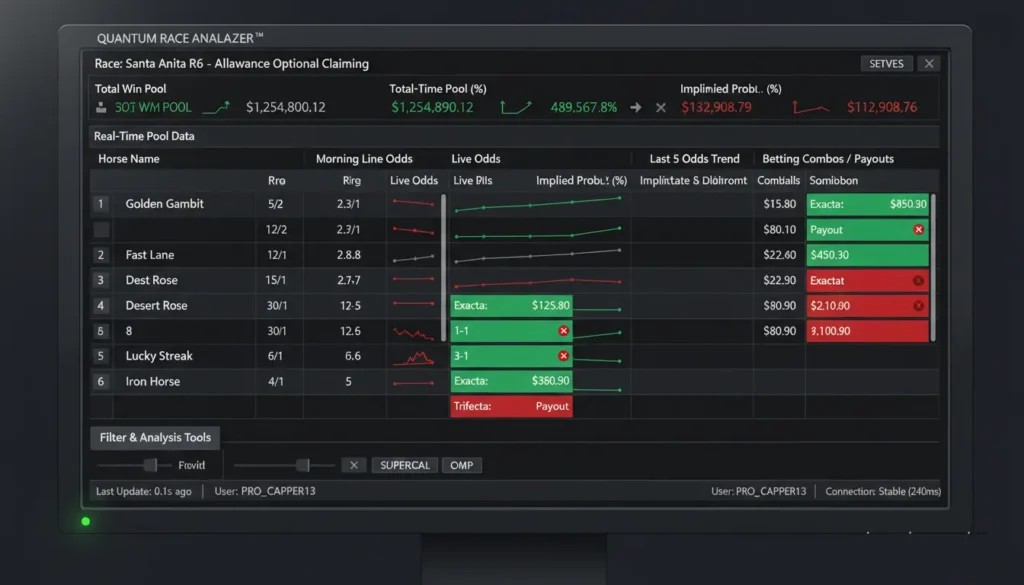
What makes TwinSpires exceptional is their pool integration. The calculator pulls real-time pool data and shows you what each combination would pay right now, not in theory. Last week at Churchill Downs, I was about to box four horses in a trifecta for $24. The calculator showed me the probable payout was $19. I passed, saved my money, and watched someone else learn that lesson the hard way.
AmWager’s Exotic Calculator does something brilliant that should be industry standard but somehow isn’t. When you input your horses for a box bet, it doesn’t just calculate that cost. It shows you alternative structures that might work better. You want to box five horses in an exacta? It’ll show you that cost, but also suggest that keying your top horse over the other four saves 60% while maintaining most of your coverage. That’s not just calculation; that’s strategic thinking.
I discovered AmWager’s true value during a Stakes race at Belmont. I was ready to box six horses in a trifecta for $120. The calculator suggested a structure where I keyed my top two choices in the first two spots with the other four horses for third, costing $32. When my exact structure hit for a $240 payout, I realized this tool had just paid for itself about a thousand times over.
DRF’s Bet Calculator integrates with their massive database of past performances, which transforms it from a calculator into a prediction tool. Input your box structure, and it shows you how similar boxes have performed historically at that track, at that distance, with similar field sizes. It’s like having a time machine that shows you the future by analyzing the past.
The patterns this reveals are stunning. Four-horse exacta boxes at Gulfstream in claiming races show positive returns. The same structure in allowance races shows negative returns. That’s not random; that’s a pattern you can exploit. The calculator literally tells you when your box structure is historically profitable or a donation to other bettors.
Sports Betting Calculators That Actually Understand Correlation
Sports betting parlays are where most calculators completely fall apart. They treat every parlay as if the legs are independent, which is mathematically criminal. If you’re betting on a team to win big, the over, and their quarterback to throw for 300+ yards, those aren’t three separate bets. They’re three ways of betting on the same scenario.
The Action Network’s Parlay Calculator is the only free tool that properly handles correlation. Input your legs, and it recognizes when you’re essentially making the same bet multiple times. Most calculators would show a three-team parlay at +600. This one recognizes your correlated play and shows the true odds closer to +450. That’s not pessimism; that’s math.
I learned this lesson expensively before finding this calculator. I was hitting three-team correlated parlays and thinking I was a genius getting +600 odds. Then I tracked my actual results and realized I was hitting at exactly the rate +450 odds would suggest. The books knew the correlation; I didn’t. This calculator levels that playing field.
OddsJam isn’t just a calculator; it’s a command center for serious parlay bettors. At $39 monthly, it’s not cheap, but if you’re betting more than $500 monthly on parlays, it pays for itself through better prices alone. The calculator shows you the best price for each leg across fifty different sportsbooks. Getting -105 instead of -110 doesn’t sound like much until you compound it across multiple legs and multiple bets. That five-cent difference is worth thousands annually.
What really sets OddsJam apart is their positive expected value filter. Input your parlay structure, and it highlights when the combined odds exceed fair value. Most of the time, parlays are sucker bets. But occasionally, correlation pricing errors create genuine positive expected value opportunities. This tool finds them automatically.
Mobile Apps: The Good, Bad, and Ugly
Mobile betting is where most money is lost these days, largely because mobile apps are designed for convenience, not calculation. They want you to bet quickly and emotionally, not carefully and mathematically. However, a few apps have managed to balance user experience with actual functionality.

Horse Racing Nation’s app shocked me with its sophistication. It’s free, works offline, and handles every exotic bet type imaginable. But the killer feature is the saved combinations function. I have twenty standard box structures saved, from conservative three-horse exacta boxes to aggressive seven-horse trifecta plays. One tap calculates current cost and probable payout. At a track with sketchy cell service, this app is a lifesaver.
The app also includes something called crowd-sourced boxes, showing you the most popular combinations other users are playing. I use this as a contrarian indicator. When everyone’s boxing the same horses, those combinations are usually underlays. I’ll structure my boxes to avoid the popular combinations, essentially betting against the crowd while maintaining similar coverage.
Spreadsheet Solutions: Why Excel Still Dominates
Despite all the fancy apps and websites, Microsoft Excel remains the most powerful betting tool available. Not because it’s the best at any one thing, but because it can do everything. Every professional bettor I know has a massive Excel file that’s evolved over years into their personal betting brain.
The beauty of spreadsheets is complete customization. My Excel system tracks every bet, calculates optimal sizing using Kelly Criterion, identifies profitable patterns, and automatically adjusts strategies based on results. It took years to build, but now it’s irreplaceable. No commercial tool matches its power because no commercial tool knows my exact betting patterns and preferences.
However, building from scratch is overwhelming. Start with templates. Punter’s Paradise offers a free exacta box calculator template that’s genuinely useful. Download it, use it for a month, then start modifying. Add a column for actual results. Create a formula for ROI. Build gradually, and within six months, you’ll have something uniquely powerful.
The advanced stuff comes later. Automatic data imports from tracks, real-time odds feeds, Monte Carlo simulations for variance analysis. But don’t start there. Start with basic tracking and calculation, then evolve based on your needs. The spreadsheet should grow with your betting sophistication, not overwhelm you from day one.
Integration Strategies: Making Tools Work Together
The real power comes from integration. Using calculators in isolation is like having a toolbox where you only use the hammer. Professional bettors create systems where each tool serves a specific purpose in a coordinated workflow.
My system works in three phases: pre-event analysis, live betting, and post-event review. Each phase uses different tools that feed information to the next phase. It’s not complicated once you establish the rhythm, but the results are exponentially better than using tools randomly.
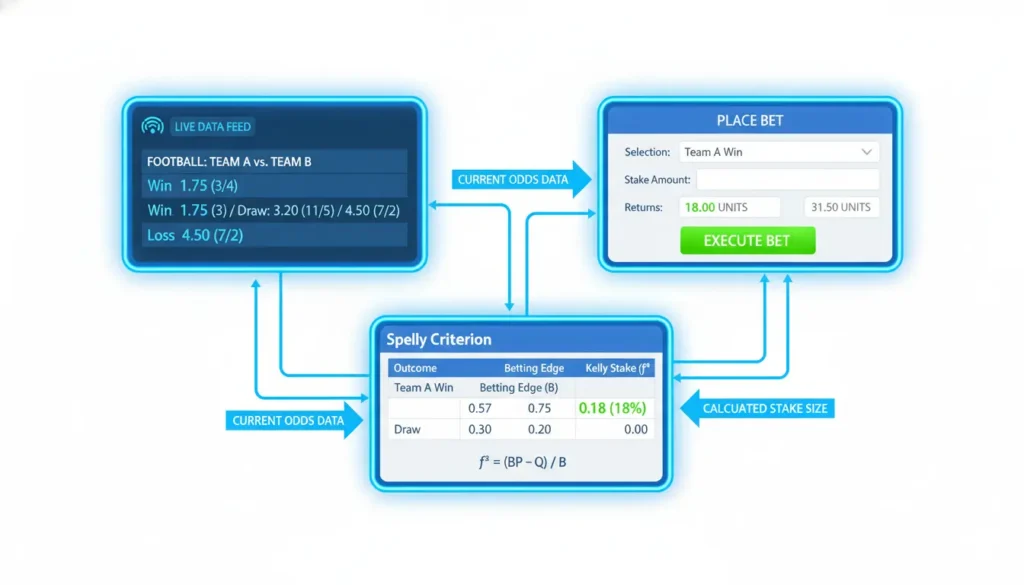
Pre-event analysis uses multiple calculators simultaneously. TwinSpires for racing math, Action Network for correlation analysis, OddsJam for price shopping. The results feed back into my master spreadsheet, which calculates optimal sizing based on Kelly Criterion modified for my personal hit rates.
Live betting requires mobile apps for execution but desktop tools for analysis. I’ll have three screens running: live odds, my spreadsheet updating in real-time, and calculator tools for quick structure analysis. It sounds excessive until you realize the edge this provides over someone betting on their phone while watching TV.
Post-event review is where learning happens. Every result is logged, analyzed, and fed back into the system. Why did that box hit? Why did that round-robin miss? Was it bad luck or bad process? The integrated system doesn’t just track results; it identifies patterns that improve future decisions.
Building Custom Tools: A Practical Guide
Eventually, every serious bettor faces the build-versus-buy decision. Commercial tools are good, but they’re built for average users with average needs. If your approach is unique, you’ll eventually need custom solutions.
The decision framework is simpler than most people make it. If you’re betting less than $25,000 annually, stick with commercial tools. The time investment in building custom solutions won’t pay off. If you’re over $100,000 annually, custom tools aren’t optional; they’re necessary for maintaining an edge. In between, it depends on your technical skills and specific needs.
Building doesn’t mean coding everything from scratch. Start with templates and modify them. Take a basic spreadsheet and add your custom formulas. Use existing APIs but create custom integrations. The goal isn’t to reinvent the wheel but to modify it for your specific racetrack.
My first custom tool was embarrassingly simple: a spreadsheet that calculated exacta box costs. That evolved into tracking results. Then analyzing patterns. Then automating calculations. Now it’s a complex system that would cost thousands to buy commercially, but I built it gradually over years, learning and improving constantly.
Common Pitfalls and How to Avoid Them
The biggest mistake I see is tool obsession. Guys spend thousands on software, subscriptions, and systems, thinking tools create winners. They don’t. Tools amplify existing edges. If you can’t pick winners manually, no calculator will magically make you profitable. Start with basic tools and upgrade as your skills improve.
Over-reliance on automation is another killer. I’ve watched bettors set up automated systems, then get destroyed when conditions change. Automation should handle repetitive tasks, not decision-making. The day you let a calculator decide what to bet is the day you start losing money.
Analysis paralysis is real. With unlimited data and tools, you can analyze forever without ever placing a bet. Set limits. Spend maximum one hour analyzing a race card or game slate. After that, you’re not improving decisions; you’re avoiding them.
The subscription trap catches many bettors. They sign up for every service, paying hundreds monthly for tools they barely use. Audit your subscriptions quarterly. If you haven’t used a tool in three months, cancel it. That money is better in your bankroll than in someone else’s pocket.
The Future Evolution of Betting Tools
The pace of innovation in betting tools is accelerating exponentially. Five years ago, same-game parlays didn’t exist. Today, we have AI-powered optimizers that can create complex correlated structures instantly. The next five years will bring changes we can barely imagine.

Machine learning is already transforming how we analyze patterns. Models can now identify profitable box structures that humans would never notice. As these models improve and become more accessible, the edge will shift from calculation to interpretation. The question won’t be what the numbers say but what they mean.
Real-time integration will eliminate the current fragmentation. Imagine one interface that combines odds from every book, calculates optimal structures, executes bets automatically, and tracks results seamlessly. It’s not science fiction; prototypes exist. Within two years, this will be standard.
Blockchain technology will revolutionize verification and settlement. Smart contracts will eliminate disputes, ensure instant payouts, and create transparent records of every bet. The shadowy world of offshore books and disputed results will end. Everything will be transparent, verified, and immediate.
But here’s the paradox: as tools become more powerful, edges become smaller. When everyone has perfect information and optimal calculators, the advantage shifts back to judgment and discipline. The tools will be incredible, but the humans using them will matter more than ever.
The bettors who’ll thrive aren’t those with the best tools but those who best integrate tools with judgment. A perfect calculator can’t account for a muddy track, a key injury announced minutes before post time, or the momentum shift when a crowd gets behind an underdog. These human elements will always matter, and tools should amplify human judgment, not replace it.
Your 30-Day Implementation Plan
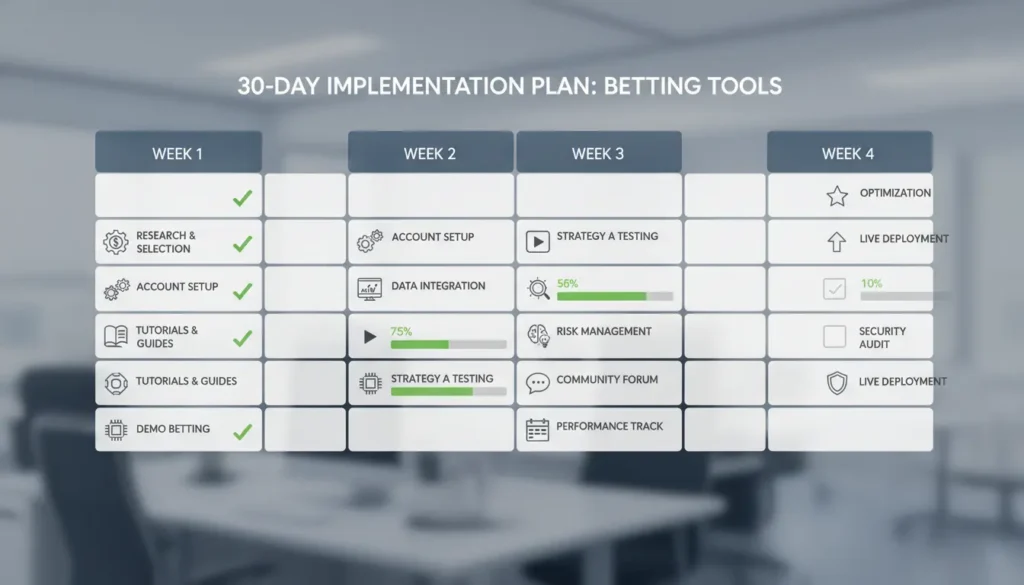
Success with betting tools doesn’t happen overnight. It requires systematic implementation and gradual sophistication. Here’s your roadmap:
Week one focuses on foundation. Download one basic calculator for your primary betting type. Start a simple spreadsheet tracking every bet. Don’t worry about fancy formulas; just record what you’re doing. This baseline data becomes invaluable later.
Week two adds comparison shopping. Install odds comparison tools and commit to checking prices before every bet. The discipline of always finding the best price is worth more than any advanced calculator. Even saving five cents per bet compounds into thousands annually.
Week three introduces analysis. Start identifying patterns in your results. Which structures hit most often? Which consistently lose? Build simple formulas in your spreadsheet to calculate hit rates and ROI by structure type. The patterns that emerge will surprise you.
Week four brings integration. Connect your tools into a workflow. Spreadsheet for analysis, calculator for structure, comparison tool for pricing, mobile app for execution. Each tool should serve a specific purpose in a coordinated system.
By day thirty, you’ll have a functional system that puts you ahead of 95% of bettors. More importantly, you’ll understand your own patterns well enough to optimize them. The tools become extensions of your betting brain, not replacements for it.
Remember, the goal isn’t to have the most tools or the fanciest software. It’s to extract maximum value from whatever tools you use. A sharp bettor with a notebook and calculator will beat a fool with supercomputers every time. The edge isn’t in the tools; it’s in how intelligently and consistently you use them.