
Weather Impact on Sports Betting
 Available in US
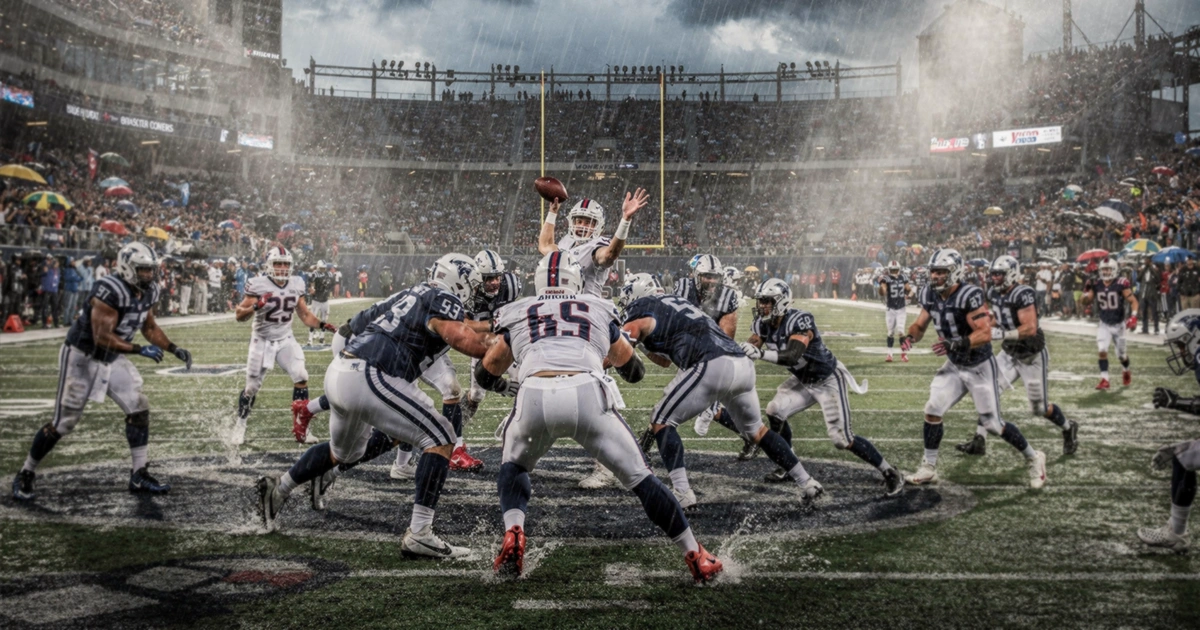
Weather represents one of the most tangible external factors affecting sports outcomes. Rain, wind, snow, and extreme temperatures alter how games are played, influencing scoring, strategy, and individual performance in measurable ways. For bettors, understanding weather’s impact creates opportunities when the market underreacts to forecasted conditions – or pitfalls when weather is overweighted or misunderstood.
Football is the primary sport where weather consistently matters. Outdoor stadiums expose games to the elements, and football’s reliance on throwing, kicking, and ball security makes it particularly weather-sensitive. Baseball, golf, tennis, and outdoor soccer also experience weather effects, though typically less pronounced than in football.
The key insight is that weather’s effects are real but often already priced into betting lines. Finding value requires understanding both the magnitude of weather effects and the degree to which the market has already accounted for them.
Table of Contents
Wind: The Most Impactful Factor
Wind affects NFL games more consistently than any other weather condition. High winds disrupt the passing game, reduce field goal accuracy, and generally suppress scoring.
At wind speeds above 15 mph, passing efficiency begins declining measurably. Quarterbacks throw shorter routes, deep balls become unreliable, and completion percentages drop. Data suggests completion percentages decline 2-3% for every 5 mph of wind above the 15 mph threshold.
At 20+ mph sustained winds, the effects become substantial. Games average roughly 3 fewer points than calm-weather games. Passing yards per attempt decline significantly, and field goal attempts from distance become risky propositions.
For totals betting, strong wind generally favours the under. Passing-oriented offences suffer disproportionately, and teams shift toward run-heavy game plans that consume clock and reduce possessions. Kickers avoid long attempts, sometimes eliminating scoring opportunities entirely.
For player props, wind creates clear directional bets: under on passing yards, passing touchdowns, and reception totals; potentially over on rushing attempts and rushing yards as game plans adjust.
The challenge is that sportsbooks also read weather forecasts. A game with 25 mph winds will have its total adjusted downward before you can bet it. Value exists when you identify wind that the market has underweighted, or when forecasts change after lines are set.
Temperature Extremes
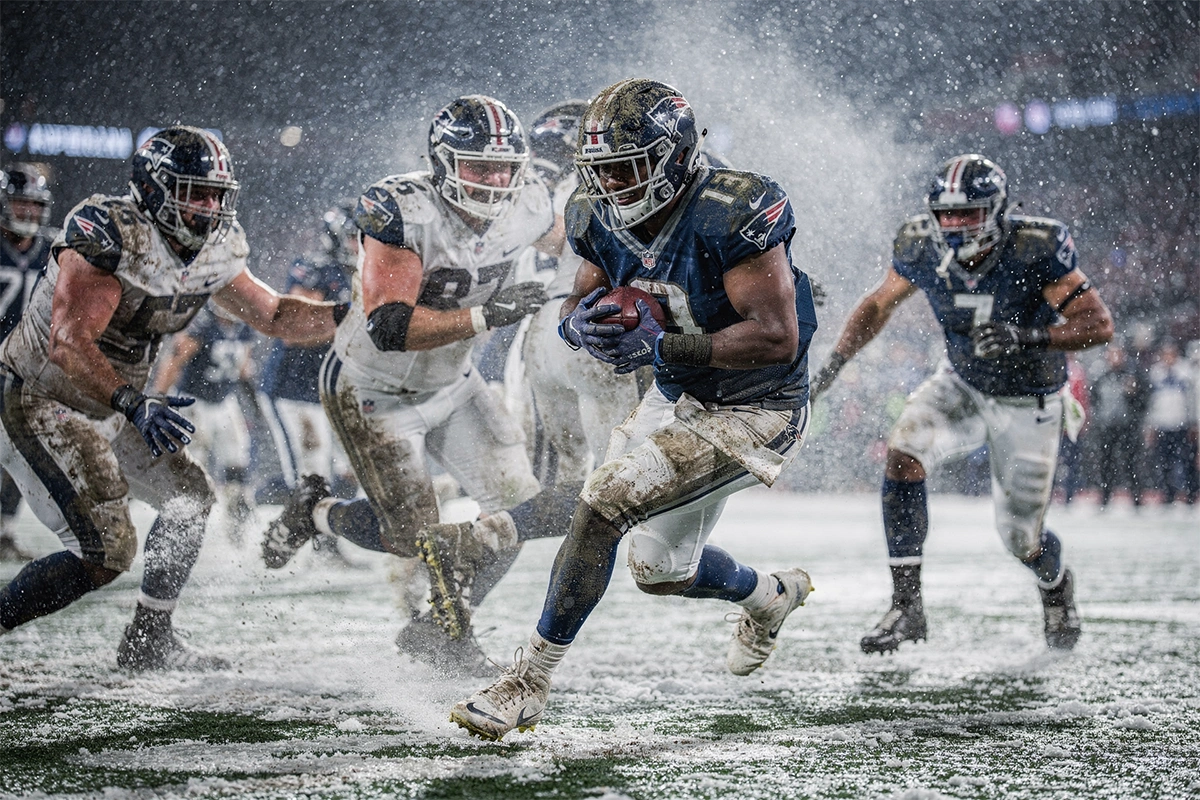
Both extreme cold and extreme heat reduce scoring, though through different mechanisms.
Cold weather (below 32°F) affects ball handling, throwing accuracy, and receiver route-running. Players’ hands lose dexterity, making catches and throws more difficult. Data shows approximately 5% reduction in scoring for games played between 25°F and 50°F, and roughly 8% reduction in games colder than 25°F or hotter than 85°F.
Extremely cold games (below 20°F) compound these effects. The 2024 Chiefs-Dolphins playoff game in -27°F wind chill illustrated how extreme cold can fundamentally alter game dynamics.
Heat affects player endurance, hydration, and sustained performance. Early-season games in hot climates can favour home teams acclimated to conditions while visitors struggle with cramping and fatigue.
For betting purposes, extreme temperature primarily affects totals. Games in weather extremes tend toward the under, as passing efficiency declines and game pace slows.
Precipitation: Rain and Snow
Precipitation effects are real but harder to quantify because intensity varies enormously. Light rain barely affects play; heavy rain transforms games.
Rain reduces passing efficiency as wet balls become slippery and receivers struggle to secure catches. Drop rates increase by several percentage points in rainy conditions. Wet field conditions increase fumbles and favour teams with strong running games and reliable ball security.
Rain generally favours the under, though the magnitude depends on intensity. A steady drizzle has minimal impact; driving rain throughout the game can reduce scoring substantially.
Snow affects games more dramatically than rain, particularly when accumulation occurs. Light snow has minimal impact on outcomes but reduces field goal accuracy (conversion rates drop to roughly 76% in snowy conditions). Heavy snow significantly impairs visibility, footing, and ball handling, with historical heavy-snow games averaging 25% fewer points than normal.
Snow games are relatively rare and highly variable – a game that starts in light flurries might end in a blizzard, or vice versa. This unpredictability makes snow games challenging to handicap with precision.
Dome Teams and Home Field
Teams that play primarily in domes face particular challenges when travelling to outdoor venues in adverse weather. Research suggests dome teams lose approximately 6% of passing yards and 5% of completion percentage when visiting outdoor venues with even 10 mph winds.
This creates a situational angle: dome teams visiting outdoor venues in forecasted bad weather face compounded challenges. Their passing games are both weather-affected and unfamiliar with playing through conditions.
Conversely, teams accustomed to harsh weather (Buffalo, Green Bay, Chicago, New England) may hold subtle advantages in poor conditions because their players practise and prepare for such circumstances regularly.
Practical Application
Incorporating weather into betting strategy requires multiple steps:
Monitor forecasts throughout the week, not just at bet placement. Weather predictions become more accurate as game time approaches. A Friday forecast differs from Sunday morning reality.
Identify when weather represents fresh information. If forecasts change significantly after lines were set, the market may not have fully adjusted. Sharp bettors react quickly to weather updates; recreational bettors often do not check forecasts at all.
Understand the threshold effects. Light wind (under 15 mph) has minimal impact. Once wind crosses 15-20 mph, effects become meaningful. Light precipitation barely matters; heavy precipitation substantially affects play. Betting the under in “bad weather” only makes sense when conditions are genuinely severe, not merely imperfect.
Check if weather is already priced in. A game total of 38 in a game with 25 mph winds probably already reflects weather concerns. The value opportunity exists when you believe weather effects are larger or smaller than the market has incorporated.
Consider player props directionally. Weather effects on specific positions are more predictable than game outcomes. Passing yards under, rushing yards over, and kicker props adjusted for conditions offer targeted opportunities.
Recognise that weather affects both teams. If wind suppresses both passing games, the effect on spread may be minimal – both offences suffer similarly. Weather primarily affects totals rather than spreads unless one team is particularly weather-vulnerable (dome team, pass-heavy offence) relative to the opponent.
Common Mistakes
Overreacting to any precipitation. Light rain or snow barely affects outcomes. Betting every rainy-game under is not a winning strategy because sportsbooks already adjust lines for forecasted conditions.
Ignoring that markets price weather. Weather is public information visible to everyone. The question is not whether weather affects games (it does) but whether your assessment differs meaningfully from the market’s assessment.
Betting on stale forecasts. Weather predictions change; lines adjust. By kickoff, most weather effects are priced in unless you acted on earlier information.
Treating all teams equally. A run-heavy team with a mobile quarterback handles bad weather better than a pass-dependent team with a pocket passer. The effect of weather varies based on team composition.
Ignoring game script possibilities. If bad weather is expected but one team falls behind early, they may be forced to abandon the run game and throw despite conditions. Weather considerations assume relatively competitive games.
Beyond Football
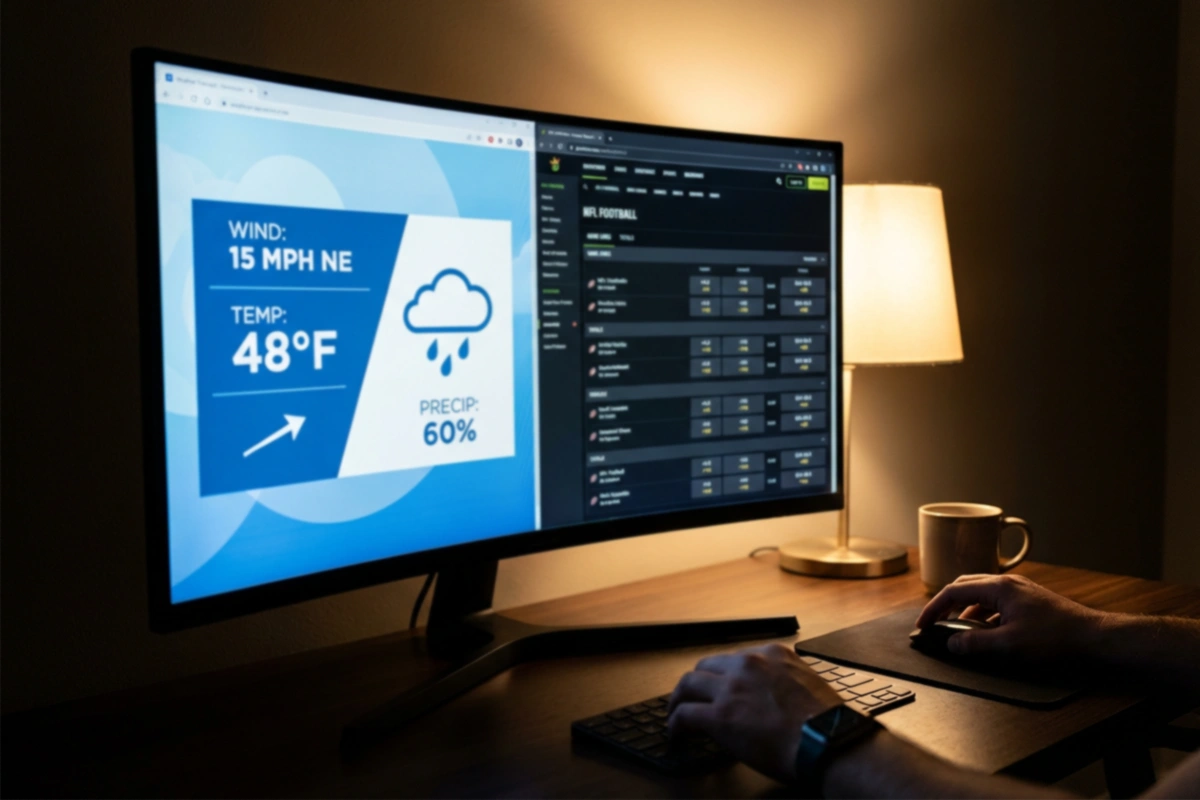
Weather affects other outdoor sports, though generally less dramatically:
Baseball sees rain delays and occasional game postponements. Wet conditions can affect pitcher grip, and wind affects home run rates in certain parks. Altitude and temperature affect ball flight more than precipitation.
Golf is highly weather-sensitive, with wind affecting shot-making and scores significantly. Afternoon tee times in windy conditions can be substantially harder than calm morning rounds.
Tennis outdoor matches are affected by wind (alters ball trajectory), heat (affects endurance), and altitude (affects ball speed). Clay courts become slippery when wet.
Soccer wet pitches can favour certain playing styles and affect ball movement. Cold weather affects player performance, particularly for teams from warmer climates.
The betting implications in these sports are generally more subtle than in football, where weather effects are most pronounced and most frequently create betting value.
Weather angles that move lines: how to price wind, rain, and temperature
Weather is a real factor affecting sports outcomes, with wind being the most reliable and impactful condition in football. Understanding weather effects provides an edge when you identify conditions the market has mispriced – either because forecasts changed after lines were set, or because you have better insight into the magnitude of effects than the betting public.
Weather should never be the sole basis for a bet but rather one input among many. A totals bet based purely on wind forecast ignores team quality, game script probabilities, and market pricing. Weather handicapping works best when combined with thorough game analysis, treating conditions as a factor that adjusts baseline projections rather than overriding them entirely.