
Reading Betting Lines Like a Pro Key Numbers and Movements
 Available in US
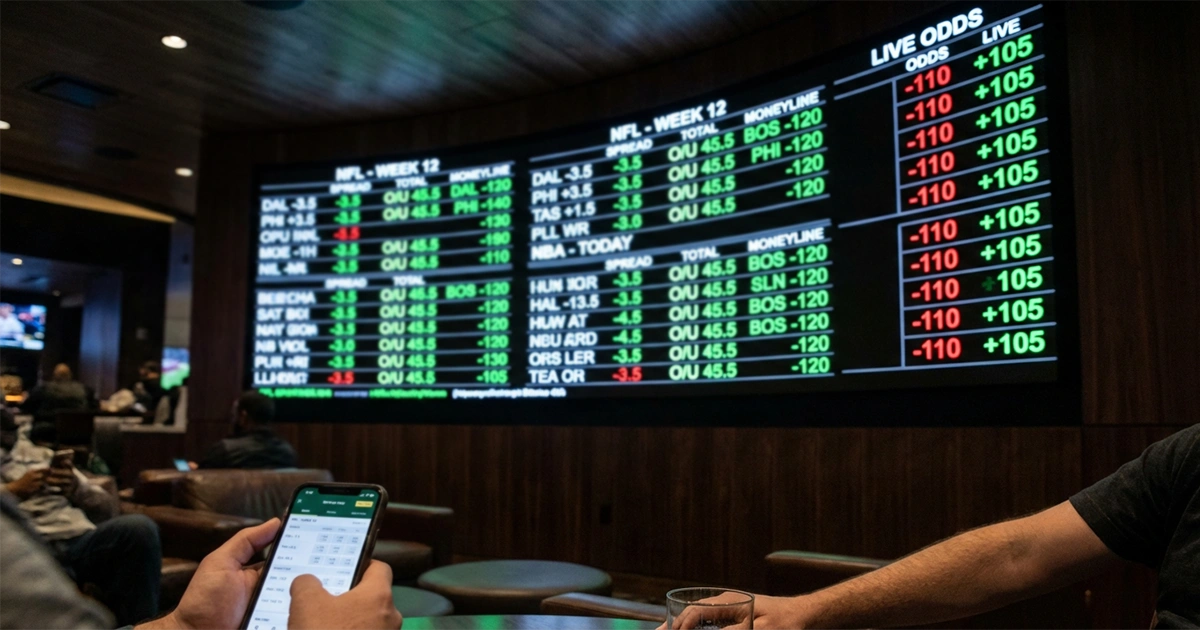
Betting lines are not static numbers etched in stone. From the moment a market opens until kickoff, prices shift and evolve in response to information, money, and market forces. Understanding why lines move and which numbers carry special significance separates informed bettors from those who simply pick teams and hope for the best. The line you see on Monday morning might look completely different by Sunday afternoon, and knowing how to interpret these changes provides genuine edge.
Professional bettors do not merely look at the current price – they study where a line opened, how it has moved, and why. A team that opened as a 3-point favourite but now sits at 6.5 tells a story. Sharp money might have pounded one side early, or significant injury news might have emerged. Reading these movements is a skill that improves with practice, and it starts with understanding the fundamental mechanics of how bookmakers adjust their prices in response to the betting market.
Key numbers add another dimension to line reading, particularly in American football where scoring happens in predictable increments. Certain spreads carry outsized importance because games land on those margins with disproportionate frequency. Recognising which numbers matter and which do not helps you evaluate whether a half-point difference justifies different action. The difference between +2.5 and +3 might seem trivial, but historically it represents one of the most valuable half-points in all of sports betting.
Table of Contents
The Mechanics of Line Movement
Lines move for two primary reasons: new information and money. Both signal something about market perception, but they require different interpretation.
Information-driven movement occurs when objective facts change. A starting quarterback is ruled out with an injury, and the spread immediately adjusts by three or four points. Weather forecasts predict heavy winds that will suppress scoring, and totals drop accordingly. A key defender is suspended following a disciplinary issue, and the market reprices the defence’s expected performance. These movements are reactive – the bookmaker is updating their probability estimate based on new data that affects the likely outcome.
Information-driven moves tend to happen quickly and decisively. When significant news breaks, sharp bettors immediately recognise the implications and flood the market with money before recreational bettors even notice. Bookmakers, anticipating this, often move their lines pre-emptively based on news alone, before significant money arrives. If you see a line jump dramatically in a short window, check the news – something meaningful almost certainly happened.
Money-driven movement occurs when betting action creates imbalanced liability. If 80% of stakes land on one side, the bookmaker faces significant exposure to that outcome. They respond by making the popular side less attractive (shorter odds, wider spread) and the unpopular side more attractive (longer odds, tighter spread). This naturally encourages money toward balance, or at least reduces the potential downside if the popular side wins.
Not all money moves lines equally. Bookmakers differentiate between sharp and recreational money. When a known professional bettor places a large wager, the line moves immediately – their opinion carries weight because they have demonstrated predictive ability over time. When ten casual bettors place the same total amount, the line might not move at all because their collective opinion has no track record of being right. This is why following “percentage of bets” can mislead – a side with 70% of tickets but only 40% of actual money has less influence than it appears.
Reading Opening Lines

The opening line represents the bookmaker’s initial opinion before any market input. Sharp bookmakers like Pinnacle deliberately open with soft lines and low limits, inviting knowledgeable bettors to bet and reveal information. The early movement off the opener often reflects the sharpest opinions in the market.
If a line opens at -3 and immediately moves to -4.5 within the first hour, sharp bettors clearly disagreed with the opener and pounded the favourite. This tells you something – professional handicappers with sophisticated models believed the opener undervalued one side. Whether you agree or follow blindly is your choice, but the information is valuable.
Conversely, if a line opens and barely moves despite significant time passing, the market broadly agrees with the opening assessment. Stable lines suggest consensus – neither sharp bettors nor significant money flows have challenged the bookmaker’s initial pricing. This does not guarantee accuracy, but it does mean the market has not identified obvious mispricing.
Pay attention to which direction a line moves first. The initial move off the opener tends to be more informative than subsequent moves because it reflects sharp early action before the public has engaged. If a line opens at -3, moves to -3.5, then drifts back to -3, the early sharp action liked the favourite, but public money on the underdog has balanced things out. This pattern – sharp money one way, public money the other – creates potentially interesting dynamics.
Key Numbers in American Football
Football scoring creates mathematical patterns that make certain margins of victory dramatically more common than others. A field goal scores 3 points. A touchdown with an extra point scores 7. These fundamental units mean games disproportionately end with margins of 3, 7, 10, and 14 – combinations of these basic scoring plays.
Historical data shows approximately 15% of NFL games finish with exactly a 3-point margin. Another 9-10% finish with exactly 7 points separating the teams. By contrast, margins like 5 or 8 occur far less frequently because they require unusual scoring sequences. This distribution has remained remarkably stable despite rule changes and evolving offensive strategies.
The practical implication is that half-points around key numbers carry exceptional value. The difference between +2.5 and +3 is enormous – games land on exactly 3 frequently enough that getting the extra half-point converts losses into pushes regularly. Similarly, +6.5 versus +7 matters significantly because of how often games land on that margin. Getting +7.5 instead of +7 protects you against one of the most common margins in football.
Bookmakers understand this perfectly. They charge a premium to move off key numbers – buying from -3 to -2.5 might cost 20 cents of extra juice rather than the standard 10. This premium reflects the true value of that half-point. When evaluating whether to buy points, only the movement on and off key numbers typically justifies the cost. Buying from -5 to -4.5 rarely makes mathematical sense because games so rarely land on exactly 5.
Key Numbers in Other Sports
Basketball operates differently because scoring happens in smaller, more frequent increments. The most important key numbers are 7 (when a game becomes a three-possession contest and trailing teams stop fouling) and 2 (the most common single-possession margin). However, the overall distribution of final margins is far more spread out than in football, reducing the impact of any individual number.
Baseball and hockey present yet another pattern – games are most frequently decided by exactly 1 run or 1 goal because scoring is relatively rare and comeback opportunities limited. The standard run line of -1.5 or puck line of -1.5 reflects this reality. Understanding that single-score margins dominate helps evaluate handicap bets in these sports.
Soccer totals cluster around certain numbers due to typical scoring patterns. Games finishing 1-0, 1-1, or 2-1 are common, making totals of 2.5 significant. The under 2.5 goals market is one of the most heavily bet in football precisely because so many matches land in that zone. However, unlike American sports key numbers, soccer margins are less predictable because of the lower overall scoring.
Interpreting Line Movement Patterns
Certain movement patterns recur frequently enough to warrant specific interpretation strategies.
Reverse line movement occurs when the line moves against the side receiving the majority of bets. If 75% of tickets are on Team A but the line moves in Team B’s favour, sharp money is clearly on Team B. The bookmaker values the professional opinions over recreational volume and adjusts accordingly. Reverse line movement does not guarantee a winning bet, but it highlights a disagreement between sharp and public money worth investigating.
Steam moves are sudden, dramatic line shifts that cascade across multiple bookmakers within minutes. They typically indicate coordinated sharp action – betting syndicates hitting multiple books simultaneously with significant money. When you see a line jump a full point in five minutes across the market, a steam move has occurred. The information is out by the time you notice, but recognising the pattern helps you understand market dynamics.
Line freezing happens when a bookmaker refuses to move their number despite significant one-sided action. This usually occurs around key numbers – a book might take heavy favourite money at -3 but refuse to move to -3.5 because they know how valuable that number is. The willingness to absorb liability rather than move off a key number signals how much the bookmaker values holding that price.
Late money refers to significant betting action in the final hours before an event. Some sharp bettors deliberately wait until close to kickoff to disguise their opinions and prevent market adjustment. Late money that moves lines is considered especially informative because it comes from bettors confident enough to wait and potentially miss the number if the line moves against them.
Practical Application

Develop a routine for tracking lines in your betting markets. Note where lines open, record significant movements, and try to identify the catalyst for each shift. Over time, patterns emerge – you will recognise which types of moves correlate with sharp action, which sports have meaningful key numbers, and how quickly your preferred bookmakers react to information.
Line shopping becomes more valuable when you understand movement. If one bookmaker sits at -3 while others have moved to -3.5, you are getting meaningful value by taking the better number. This is not merely a theoretical edge – the historical frequency of games landing on exactly 3 means that half-point regularly determines bet outcomes.
Be cautious about chasing moves. By the time you notice significant line movement, the sharp money that caused it has already been placed. Betting after a steam move puts you at the end of informed action, often getting worse numbers than those who acted early. Unless you have independent reasons to like the bet, following moves after the fact is typically a losing strategy.
Finally, understand that line reading is a supplementary skill, not a primary handicapping method. Sharp bettors move lines because they have superior information or models, not because they simply read lines well. Your goal should be to develop your own informed opinions and use line reading to validate or challenge those opinions – not to substitute line watching for genuine analysis.