
Line Shopping Why Comparing Odds Across Bookmakers Matters
 Available in US
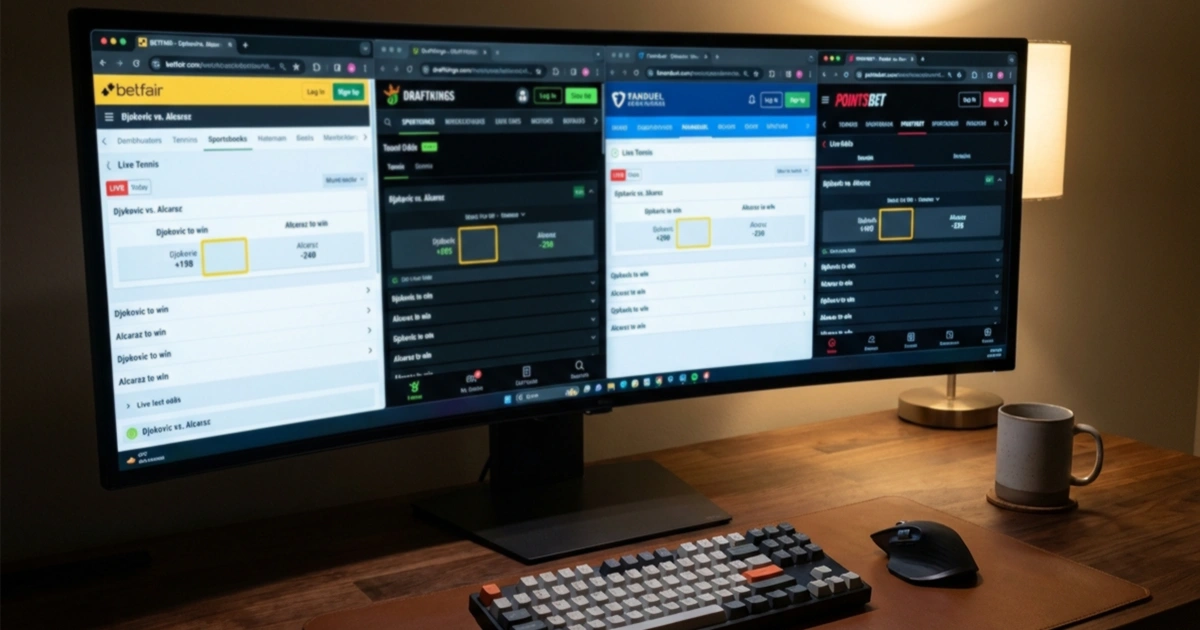
Line shopping is the single easiest way to improve your sports betting results without becoming a better handicapper. The concept is simple: different sportsbooks offer different prices on the same events, and consistently taking the best available price puts more money in your pocket over time. No analysis required, no prediction skill needed – just the discipline to check multiple books before placing every bet. Yet most recreational bettors ignore this low-hanging fruit entirely, leaving significant money on the table.
The price variations between sportsbooks are not random anomalies. Each book sets odds independently based on their risk models, customer base, and operational philosophy. Sharp books like Pinnacle aim for efficient pricing with thin margins. Recreational books like DraftKings and FanDuel shade lines toward public favourites and offer promotions that create pricing differences. Market-making books open lines early and adjust based on betting action. These different approaches guarantee that odds will vary across the market, often substantially.
Think of line shopping as comparison shopping for any consumer product. You would not pay $50 for an item available elsewhere for $40. Yet bettors routinely accept -110 odds when -105 is available down the street, or take +150 when +165 sits at another book. Over hundreds of bets, these differences compound into thousands of dollars in either direction. The bettor who consistently takes best prices enjoys a structural advantage over one who bets wherever is most convenient.
Table of Contents
The Mathematics of Better Prices
Small odds differences create meaningful long-term impact because sports betting operates on thin margins. The difference between -110 and -105 might seem trivial on a single bet, but the cumulative effect is substantial.
At standard -110 juice, you need to win 52.38% of bets to break even. At reduced -105 juice, breakeven drops to 51.22%. That 1.16 percentage point difference might not sound like much, but consider: a bettor who would exactly break even at -110 becomes profitable at -105 without improving their picks at all. The better price alone generates edge.
Across 1,000 bets at $100 per wager, a bettor hitting exactly 52.38% wins would break even at -110 but profit approximately $1,160 at -105 on the same picks. Over a season of active betting, line shopping can easily add several thousand dollars to your bottom line – free money for taking a few extra minutes per bet.
The impact is even more pronounced on moneylines, where odds vary more dramatically. Taking +165 instead of +150 on a winning underdog bet pays an extra $15 per $100 wagered. If you bet underdogs regularly and consistently find 10-15 cent improvements, the annual difference could fund a vacation. These are not hypothetical gains – they are mathematical certainties for anyone who shops lines consistently.
How to Shop Lines Effectively
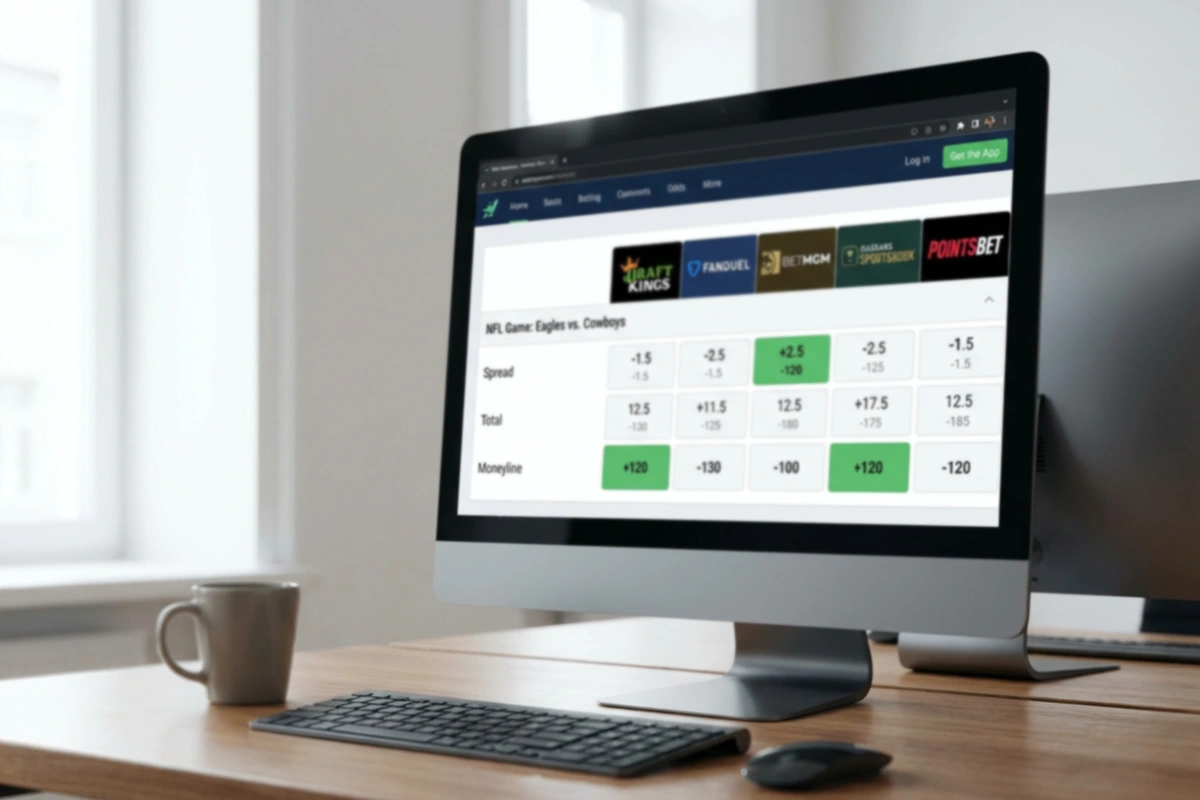
Maintain multiple sportsbook accounts. You cannot shop if you only have one option. Serious bettors typically maintain accounts at five or more books, covering different categories: sharp books for efficient lines, mainstream books for promotions and alternate lines, and niche books that might offer value on specific sports. The more options you have, the better prices you will find.
Use odds comparison tools. Manually checking each sportsbook for every bet is tedious. Odds comparison websites aggregate prices from major books, highlighting the best available line at a glance. Some display spreads and totals from a dozen books side-by-side, immediately revealing where value exists. Mobile apps and browser extensions can speed this process further.
Compare both lines and juice. Line shopping has two dimensions for spread and totals bets. First, compare the actual numbers – is one book offering -3 while another has -2.5? Second, compare the juice on identical numbers – is one book at -110 while another offers -105? A half-point difference in spread often matters more than a nickel of juice, but both affect expected value.
Know your books’ tendencies. Different sportsbooks behave predictably. Some are slow to move lines after news breaks, creating windows of value. Some shade heavily toward public favourites, offering value on unpopular sides. Some offer reduced juice on specific bet types or sports. Learning each book’s patterns helps you know where to look first for value on different bet types.
Act quickly on discrepancies. When you find a significantly better price at one book, it often means that book is behind the market. Sharp bettors will soon flood in and force the line to move. The window for capturing off-market prices can be minutes or hours, not days. If you identify value, bet it promptly before it disappears.
What to Shop For
Point spreads offer shopping opportunities in two forms. Different books might have different spread numbers entirely – one at -3.5, another at -3, a third at -2.5. They might also have the same spread at different prices. Around key numbers like 3 and 7 in football, that half-point difference carries enormous historical value. Getting -2.5 instead of -3 or +7.5 instead of +7 has repeatedly proven valuable across decades of NFL results.
Totals work identically to spreads. One book might post a football total at 47.5 while another sits at 48. Over bettors want the lower number; under bettors want the higher. Even without number differences, juice varies – taking under 47.5 at -108 beats taking it at -112. Every cent of reduced juice improves your expected value.
Moneylines often show the largest absolute price differences. A heavy favourite might be -180 at one book and -165 at another. An underdog might range from +150 to +175 across the market. These gaps are substantial enough that failing to shop moneylines is essentially donating money to less competitive sportsbooks.
Futures exhibit massive pricing variation because the markets are less liquid and books take more margin. A team’s championship odds might be +800 at one book and +1200 at another – the same bet, a 50% difference in payout. Always shop futures carefully, as the discrepancies are often larger than any other market.
Props and same-game parlays vary wildly because books price them independently with wide margins. Player props particularly show dramatic differences since books use different projections and have varying risk appetite. A player’s over 22.5 points might be -120 at one book and +100 at another. Shopping props takes more effort since comparison tools often do not cover them, but the payoff can be significant.
Sharp Books vs. Recreational Books
Understanding the difference between sharp and recreational sportsbooks helps you shop more efficiently.
Sharp books (Pinnacle, Circa in Las Vegas, Bookmaker) welcome winning bettors and operate on thin margins. Their lines are considered the most efficient because sophisticated bettors continuously bet into them, correcting any mispricings. Sharp book prices, after removing the vig, approximate true market probabilities. These books rarely offer the best price for recreational bettors specifically, but they provide the benchmark against which other books should be compared.
Recreational books (DraftKings, FanDuel, BetMGM, Caesars) target casual bettors and make money through higher margins and promotional activity. They often shade lines toward public favourites, knowing their customer base will bet popular teams regardless. This creates value on underdogs and unpopular sides. Recreational books also offer bonuses, boosted odds, and promotional pricing that can create genuine value opportunities unavailable at sharp books.
Market-making books open lines early and adjust based on incoming action. They essentially crowdsource line setting, using early sharp money to identify the correct price. These books can offer value immediately after opening if you have an opinion before the market has settled – but they can also move lines rapidly once sharp action arrives.
The optimal line shopping strategy uses all three types: sharp books for baseline pricing and efficient lines on major markets, recreational books for promotional value and shaded line exploitation, and market-making books for early line opportunities when you have strong conviction.
Common Mistakes
Loyalty to one sportsbook costs bettors more than almost any other mistake. Convenience is not worth the price you pay in worse odds. Even if your “home” book is comfortable and familiar, checking other options before every bet takes minimal effort and produces guaranteed benefits.
Ignoring small differences reflects a failure to understand compounding returns. Yes, the difference between -108 and -112 is tiny on one bet. Over 500 bets, it represents hundreds of dollars. Professional bettors obsess over pennies because pennies become dollars become thousands.
Shopping after the fact wastes the effort entirely. Comparing prices after placing your bet provides information that cannot help you. Build line shopping into your pre-bet routine, not your post-bet analysis.
Failing to maintain accounts limits your options when you need them. If you only sign up for new books when you spot a good price, you miss the opportunity – account setup takes time, and the line will have moved. Maintain funded accounts at multiple books so you can act immediately when value appears.
Overlooking reduced juice offerings means missing some of the most reliable value available. Some books permanently offer -105 on spreads and totals rather than -110. Others offer reduced juice days or promotions. These consistent discounts should factor heavily into where you bet.
Practical Implementation

Start by signing up for at least three sportsbooks in your jurisdiction. Prioritise variety: one sharp book if available, one or two major recreational books, and perhaps a smaller book known for competitive pricing. Deposit enough at each to avoid being blocked from taking good lines when you find them.
Before every bet, spend two minutes checking prices. Use an odds comparison site for speed, or manually check your books if the bet type is not covered. Note which book has the best number and best juice. Place your bet at the optimal location, even if it is not your preferred interface.
Track your line shopping results. Note what price you took and what you could have gotten elsewhere. Over time, this data reveals how much value you are capturing (or missing) and which books consistently offer better prices for your bet types.
Periodically evaluate your sportsbook lineup. Some books become less competitive over time, while new options emerge. Read reviews, compare pricing policies, and be willing to add or drop books based on their value proposition. Your goal is access to the best prices available, which requires ongoing attention to the market landscape.
Line shopping requires effort but demands no skill. Unlike handicapping, which requires analysis and carries uncertainty, line shopping provides guaranteed mathematical benefit to anyone who bothers to do it. The only question is whether you value your money enough to spend a few extra minutes per bet securing the best price available.