
Reading Line Movement What Shifting Odds Tell You
 Available in US

Betting lines are not static. From the moment a sportsbook posts an opening number until game time, lines shift – sometimes dramatically, sometimes subtly. These movements tell stories about where money is flowing, what information has emerged, and how the market values each side. Learning to read line movement transforms odds from snapshots into narratives, revealing the forces shaping the betting market.
Understanding line movement does not guarantee profitable betting. Markets are efficient, and by the time you observe movement, the value may have disappeared. But monitoring how lines change provides insight into market dynamics, helps you time your bets more effectively, and occasionally reveals opportunities that less attentive bettors miss.
This analysis focuses on why lines move, what different types of movement indicate, and how to incorporate line movement into your betting process without falling into common traps.
Table of Contents
Why Lines Move
Betting action is the primary driver of line movement. When sportsbooks receive disproportionate money on one side, they adjust the line to make the other side more attractive and balance their exposure. If heavy action arrives on the favourite, the book moves the line to give the underdog more points, encouraging bets on the underdog.
But not all betting action is weighted equally. Sportsbooks distinguish between recreational bettors and sharp bettors. A professional with a proven track record placing a $10,000 bet might move the line more than $100,000 in aggregate public money. Books respect sharp action because sharps win over time; accommodating their implied opinion reduces the book’s risk.
Information changes also move lines. Injury reports, weather updates, lineup confirmations, and other news affect fair value. When a star player is ruled out, the line adjusts to reflect reduced team strength. Weather forecasts predicting wind or precipitation affect totals. Books respond to information as it becomes available.
Liability management motivates movement when a book has excessive exposure to one outcome. Even if the line represents fair value, a book might adjust it to reduce potential payout on a heavily bet side. This is risk management rather than probability assessment.
Market-making books often move first based on sharp action, and other books follow. Watching how lines move across the market – which books adjust first, which lag – provides clues about where sophisticated money is landing.
Types of Line Movement
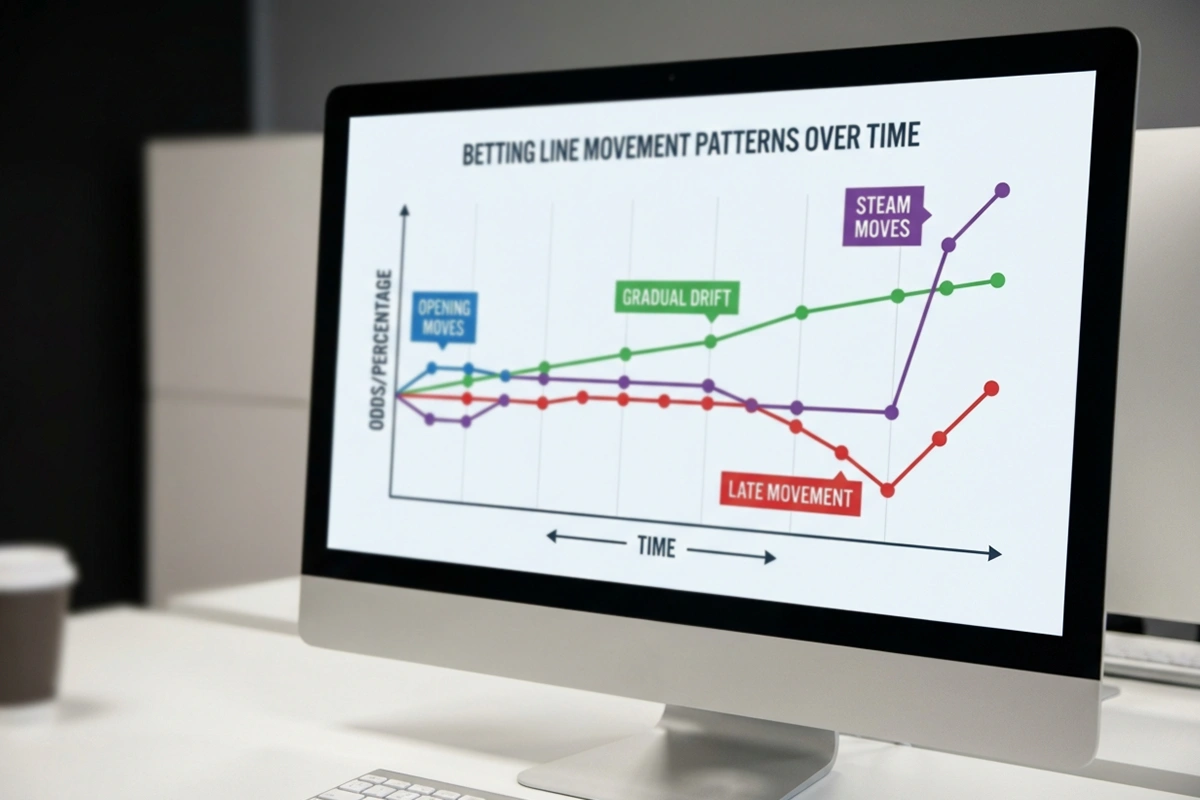
Opening moves occur immediately after lines are posted. Sharp bettors analyse opening lines as soon as they appear, betting quickly if they identify value. A line that moves significantly within hours of opening indicates sharps grabbed an attractive number. Early action from respected bettors shapes the line before most recreational bettors even notice the game is available.
Gradual movement throughout the week reflects accumulating action from both sharp and public bettors. A line that drifts steadily in one direction suggests consistent money on that side. The movement may accelerate as game time approaches and betting volume increases.
Late movement in the final hours before kickoff often carries particular significance. Betting limits increase close to game time, allowing sharps with large bankrolls to place substantial wagers. Late movement frequently represents the most informed money entering the market.
Steam moves are sudden, sharp adjustments that occur simultaneously across multiple sportsbooks. When a significant bet from a respected source hits one book, other books quickly adjust to protect themselves. Steam moves happen fast – the line might shift a full point within minutes – and by the time casual bettors notice, the opportunity has passed.
Reverse line movement occurs when the line moves in the opposite direction of public betting. If 75% of bets are on the favourite but the line moves toward the underdog, something interesting is happening. The book is responding to factors other than bet count – typically sharp money on the underdog that outweighs the volume of public bets.
Interpreting Reverse Line Movement
Reverse line movement is one of the clearest signals of sharp action. The logic is straightforward: if most bets favour one side but the line moves toward the other, the book must respect the minority opinion more than the majority. This usually means professionals are betting the side receiving fewer bets but more significant money.
However, interpreting reverse line movement requires caution. The bet percentage data available to the public is imperfect – often showing ticket counts rather than actual money wagered. A game where 80% of tickets are on the favourite might actually have 50% of the money on the favourite if the underdog tickets are much larger.
Furthermore, reverse line movement can reflect factors other than sharp action. A book might move a line due to injury news, weather updates, or internal liability concerns regardless of betting patterns. Assuming all reverse movement represents sharp money leads to oversimplified analysis.
Reverse line movement works best as one input among many rather than a standalone strategy. When reverse movement aligns with your own analysis – when you independently liked a side and then see the line moving in that direction despite public betting the other way – confidence increases that you have identified genuine value.
Key Numbers and Line Movement
In point spread betting, certain numbers carry special significance. In football, 3 and 7 are key numbers because games frequently end with these margins due to scoring structure. In basketball, numbers near 5-7 points matter because games are often competitive but not typically decided by a single point.
Line movement through key numbers is particularly meaningful. A football game moving from -2.5 to -3 crosses the crucial 3-point threshold; a team winning by exactly 3 now covers rather than pushes on the original number. Similarly, movement from -6.5 to -7 captures the second-most common margin.
Sharp bettors often compete to grab lines at advantageous key numbers, willing to bet immediately when a line hits a desirable number. Understanding key numbers helps you evaluate when line movement represents genuine value capture versus noise.
Using Line Movement Strategically
Timing your bets is the most direct application of line movement analysis. If you identify value early in the week and expect the line to move against you, betting immediately captures the best number. If you expect the line to move in your favour, waiting might yield a better price.
The challenge is that predicting line movement requires predicting what others will do – a difficult task. Rather than trying to forecast movement, most bettors focus on betting when they identify value, accepting whatever movement follows as part of the process.
Confirming your analysis through line movement provides psychological comfort even if it does not change expected value. When you like a side and then see the line move in your direction, it suggests you have correctly identified value that the market is recognising. When the line moves against you, it prompts reconsideration – perhaps you missed something.
Shopping for the best number becomes more effective when you understand why lines differ across books. If one book is slow to adjust after a steam move, you might capture value at the stale line. If one book consistently offers better prices on underdogs, you know where to look when betting underdogs.
Common Mistakes
Chasing steam means trying to bet the same direction as sharp money after observing a steam move. The problem is timing – by the time you notice the move, the value is often gone. Sharps captured value at the pre-move price; you are betting the post-move price, which may no longer offer edge. Chasing steam systematically yields worse numbers than the sharps obtained.
Overweighting reverse line movement leads to betting sides you would not otherwise bet simply because the line moved unexpectedly. Reverse movement is a signal worth noting, not a command to bet. If your analysis does not support the side receiving reverse movement, the movement alone should not override your judgment.
Ignoring context produces misinterpretation. A line that moves due to injury news is not sharp action. A line that moves because one book has unusual liability is not market consensus. Understanding why lines move matters as much as observing that they moved.
Assuming you can predict movement leads to waiting for lines that never materialise. Rather than betting now because you have identified value, you wait for the line to improve further – but it moves the other way. Speculative timing often costs value rather than capturing it.
Practical Application
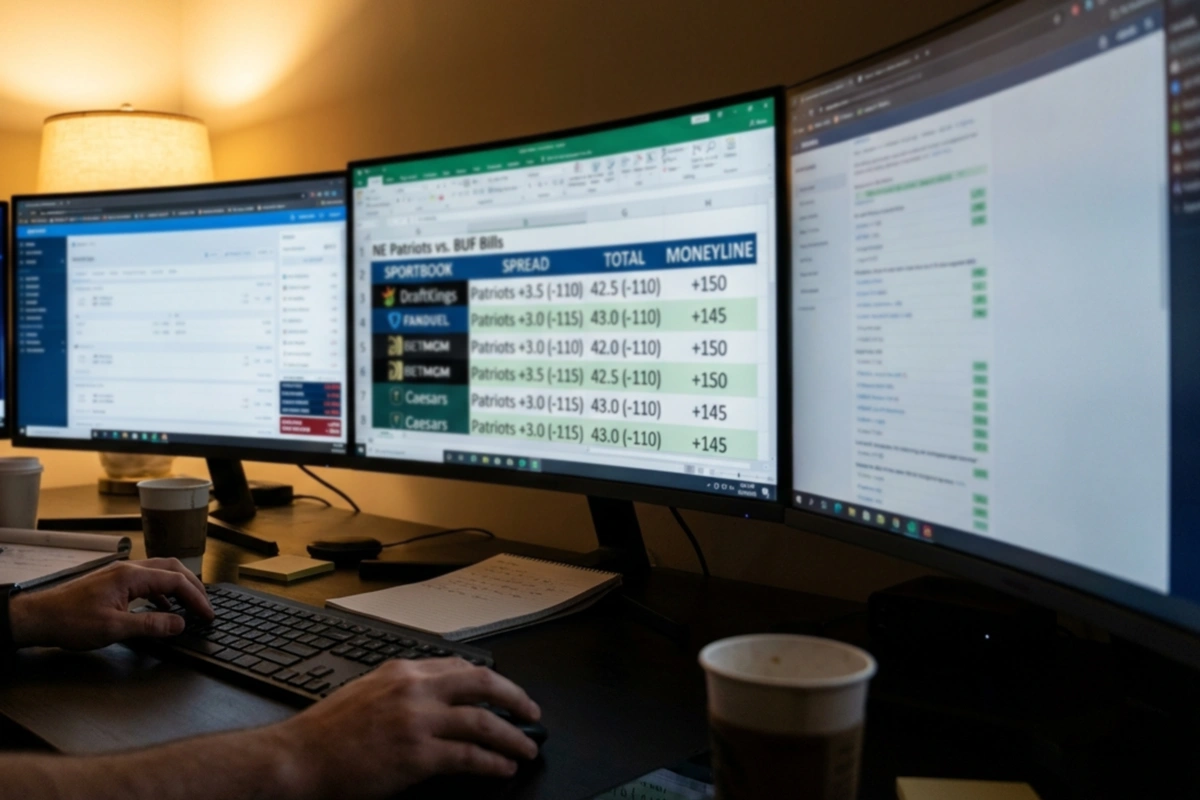
Monitor lines throughout the week if you are betting early in the week. Note where they open, how they change, and whether movement aligns with or contradicts public betting patterns. This observation builds intuition about market dynamics even when you are not actively betting.
Compare lines across multiple sportsbooks. Discrepancies between books create opportunities; understanding which books lead and which follow helps you act quickly when opportunities appear.
Track your own bets relative to closing lines. Are you consistently betting before favourable movement, or are you getting poor numbers? This closing line value analysis reveals whether your timing is helping or hurting your results.
Use line movement as one input among many. Combine it with your own analysis, public betting percentages, and any other relevant information. No single factor determines betting value; line movement is part of a larger picture.
Line movement provides a window into the betting market’s collective intelligence. Reading it skillfully enhances your understanding of how markets function and helps you time your bets more effectively. But it is a tool, not a strategy. The strategy is identifying value through analysis; line movement helps you capture that value more efficiently.