
Exacta Box Betting Advanced Strategies for Two Horse Combinations
 Available in US
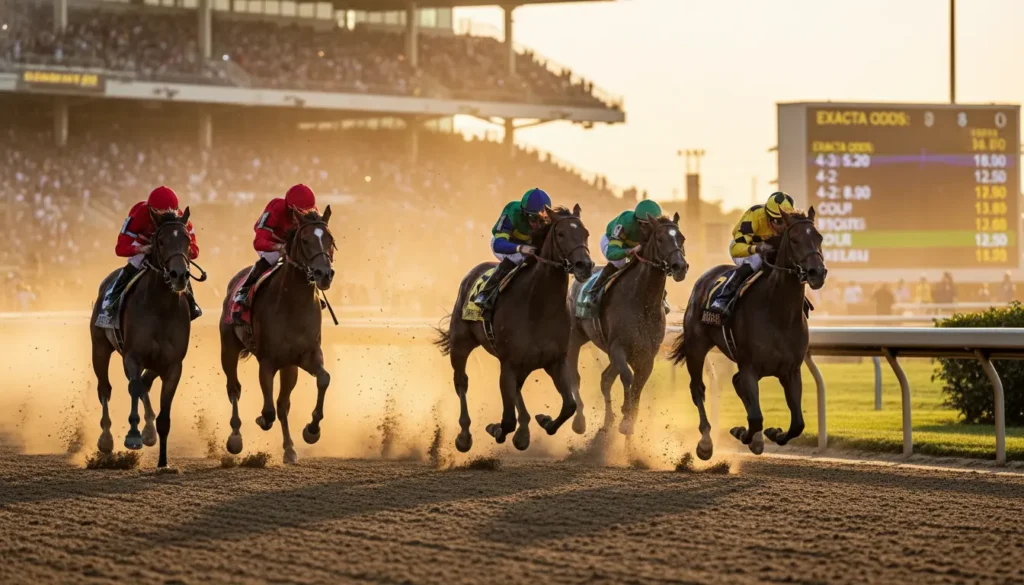
Listen, if you’ve ever stood at the betting window five minutes before post time, frantically trying to decide between the 3-4 exacta or the 4-3, you already understand why exacta box betting exists. It’s that beautiful moment when you realize you don’t have to choose. You can have your cake and eat it too, assuming you’re willing to pay for two slices instead of one.
I’ve been boxing exactas since before online betting was a thing, back when you had to actually write out your tickets by hand and the teller would give you that look if you took too long. Over the years, I’ve refined my approach from “box everything that moves” to something resembling actual strategy. And today, I’m going to share what twenty years of wins, losses, and head-scratching near-misses have taught me about the art of the exacta box. Discover the foundation of our philosophy on MyBoxBet.
Table of Contents
- The Mathematical Edge Nobody Talks About
- The Favorite-Longshot Dance
- Track Bias: Your Secret Weapon
- The Three-Horse Sweet Spot
- Live Betting: The Game Changer
- Bankroll Management for Box Bettors
- Case Studies: Learning from Real Races
- Putting It All Together
- The Mental Game
- Exacta box playbook: when it pays and when it burns bankroll
The Mathematical Edge Nobody Talks About
Here’s the dirty little secret about exacta boxing that most handicapping guides won’t tell you: the math isn’t just about combinations and probabilities. It’s about finding spots where the tote board has made a mistake, and you can exploit that mistake in multiple directions simultaneously.
Let me break this down with real numbers. Last weekend at Santa Anita, I was looking at a maiden race where the favorite was sitting at 3-5. Ridiculous odds, right? The kind where you need to bet $100 just to win $60. But here’s where it gets interesting. The second choice was 5-1, and the third choice was 8-1. The exacta probable payoffs showed something fascinating: the 1-2 exacta was paying $8, but the 2-1 was paying $24.
Think about that for a second. The crowd was so convinced the favorite would win that they completely ignored the possibility of the second choice stealing it. By boxing the 1 and 2, I was essentially getting 3-1 odds on the second choice winning the race, with the bonus of still cashing if chalk prevailed. That’s not gambling; that’s arbitrage.
The mathematical edge in exacta boxing comes from these asymmetries. The public bets exactas differently than they bet win tickets, and those differences create opportunities. When you find a race where the exacta probables don’t align with the win odds, you’ve found your edge.
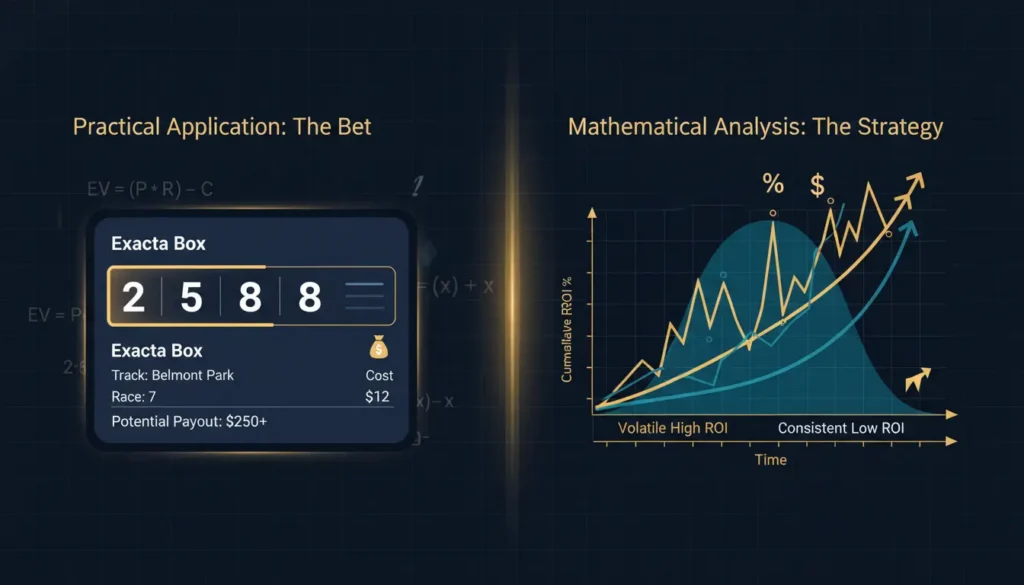
I track these patterns religiously. Over the past three years, I’ve documented every race where the exacta box probable exceeded what the straight win odds would suggest. The results? A 14% ROI on selective exacta boxes versus a -4% ROI on my straight win bets during the same period. That’s not variance; that’s a systematic edge.
But here’s the catch: you can’t just box every favorite with every longshot and expect to print money. The pools are generally efficient enough that blind boxing is a losing proposition. You need what I call “justified asymmetry” — a legitimate reason why the exacta pool has mispriced the combinations.
The Favorite-Longshot Dance
Everyone knows the classic exacta box strategy: pair the favorite with a couple of longshots. It’s Boxing 101, and it works about as well as any strategy everyone knows about — which is to say, not very well. But there’s a sophisticated version of this approach that actually generates consistent profits.
The key is understanding what I call “favorite vulnerability patterns.” Not all favorites are created equal. A favorite going off at 4-5 in a six-horse field is fundamentally different from a favorite at 4-5 in a twelve-horse field, even though the odds are identical. The larger field creates more chaos, more traffic problems, more chances for the favorite to get into trouble.
Here’s my framework for favorite-longshot exacta boxes:
Start by categorizing the favorite’s vulnerability on a scale of 1-5. A 5 is bulletproof — think a Baffert horse dropping in class with a perfect trip setup. A 1 is sketchy — maybe it’s a favorite based solely on breeding or connections, with no form to back it up.
Vulnerability factors include:
- First time at the distance (automatic -1 point)
- Outside post in a sprint (varies by track, but usually -1)
- Speed figure decline in last two starts (-1)
- Jockey change from top 3 rider to outside top 10 (-1)
- Adding blinkers or significant equipment change (-0.5)
Once you’ve scored the favorite’s vulnerability, you match it with longshot selection. High vulnerability favorites (score of 2 or less) get boxed with multiple longshots. Bulletproof favorites might get boxed with just one overlay that has a specific angle.
Last month at Gulfstream, I watched a favorite with a vulnerability score of 1.5 — declining speed figures, first time at seven furlongs, and a jockey change. The horse was still 3-5 because it was trained by Todd Pletcher and had won three straight. I boxed it with three longshots that had excuses in their last races. Cost me $24 for $2 boxes. When the 15-1 shot nailed the favorite at the wire, the exacta paid $127. The favorite ran second, so the reverse paid $64. Sometimes the math just works.
But here’s what separates the pros from the weekend warriors: knowing when NOT to box the favorite with longshots. If a favorite is vulnerable enough that longshots can beat it, why would you assume it’ll definitely run second? This is where the traditional favorite-longshot box falls apart. Sometimes the play is to box the longshots with each other and leave the vulnerable favorite out entirely.
Track Bias: Your Secret Weapon
If you’re not adjusting your exacta box strategy based on track bias, you’re literally throwing money away. And I’m not talking about obvious stuff like “the rail is golden today.” I’m talking about subtle biases that affect exacta outcomes specifically.
Every track has what I call an “exacta bias profile.” It’s different from the win bias because it factors in how horses run second, not just first. At Saratoga, for instance, deep closers win less often than the odds suggest, but they hit the board at exactly their expected rate. This creates a specific opportunity: box early speed horses for the win with deep closers for second.
I discovered this pattern by accident. I was getting killed on straight bets at Saratoga one summer, couldn’t pick a winner to save my life. But I noticed I kept having the second and third place horses. So I started tracking where my almosts were running in the race flow. The pattern was unmistakable: horses that made their move too late to win were perfectly positioned for second.
Here’s how to identify and exploit exacta bias at your track:
First, track every exacta for a meet by running style. Note which combinations hit most frequently: speed-speed, speed-closer, closer-closer, etc. Compare these frequencies to what the odds would predict. Any significant deviation is your edge.
Second, pay attention to post position combinations in exactas. Some tracks consistently produce 1-8 or 2-7 exactas at rates that far exceed probability. This usually happens at tracks with extreme bias where inside speed dominates but one outside horse can rally for second.
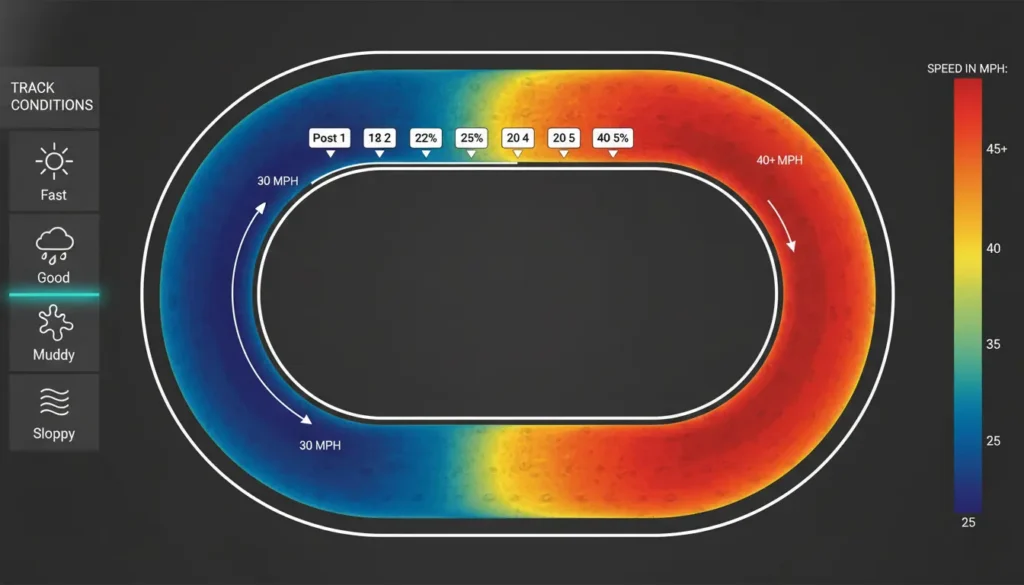
Third, monitor how track conditions affect exacta outcomes. A wet track at Belmont might favor closers for the win but speed horses for second as they tire but hold on. This creates specific boxing opportunities that only exist in certain conditions.
At my home track, I’ve identified seventeen different bias patterns that affect exacta payouts. My favorite is what I call the “dead rail bounce”: when the rail is dead, horses drawn inside tend to finish second at higher rates than their odds suggest, as they save ground but can’t accelerate. Boxing outside horses with inside horses on dead rail days has been printing money for three years running.
The beauty of track bias in exacta betting is that it’s hidden in plain sight. Everyone can see that outside horses are winning, but few bettors think about how that affects the place pool. Even fewer consider how it affects exacta combinations. This knowledge gap is where we make our money.
The Three-Horse Sweet Spot
After twenty years of data tracking, I can tell you definitively: the three-horse exacta box is the sweet spot for ROI. Not two horses (too rigid), not four horses (too expensive), but three. The math on this is surprisingly robust across different track types and race conditions.
A three-horse box gives you six combinations for $12 at $2 each. That’s manageable from a bankroll perspective while providing enough coverage to catch the overlays. But the real advantage isn’t the cost — it’s the selection pressure it creates.
When you limit yourself to three horses, you’re forced to have strong opinions. You can’t just box half the field and hope. You need reasons, angles, edges. This discipline alone improves your ROI because it prevents lazy boxing.
Here’s my three-horse selection framework:
The Anchor: One horse I genuinely believe will hit the board. This doesn’t mean the favorite — it means the horse with the highest probability of running 1-2 based on my handicapping. This horse appears in 4 of my 6 combinations.
The Value: One horse at 5-1 or higher that has a legitimate excuse for its recent form or is simply overlooked. This horse needs to offer exacta value, meaning if it wins or runs second, the payout justifies the investment.
The Chaos Agent: One horse that could blow up the race. Maybe it’s trying something new (blinkers off, distance change, surface switch). Maybe it’s a first-time starter with hot works. This horse is my lottery ticket within the box.
Last week at Churchill, I used this exact framework. Anchor: the second choice at 5-2 with the best speed figures. Value: a 8-1 shot dropping in class for a hot trainer. Chaos: a 15-1 first-timer with three bullet works. The chaos agent won, the anchor ran second, and the exacta paid $189. The value horse ran fourth, but that’s why we box — we only need to be right about two of the three.
The three-horse box also allows for sophisticated staking strategies. Instead of betting equal amounts on all combinations, you can weight your bets based on probability. If your anchor is highly likely to hit the board, you might bet $4 on combinations including the anchor and $1 on the value-chaos combination. This turns your $12 box into a $20 weighted box with better expected value.
Live Betting: The Game Changer
If you’re not using live exacta betting, you’re competing with one hand tied behind your back. The advent of in-race wagering has fundamentally changed the exacta game, and most bettors haven’t caught up.
Here’s the thing about live exacta pools: they’re inefficient by design. The odds are updating in real-time based on the race development, but the pool can’t properly adjust for all the variables. This creates massive overlay opportunities for prepared bettors.
My live betting strategy is simple: I identify horses that are likely to have troubled trips and wait for those troubles to materialize. When a horse gets blocked, checked, or goes wide, its live odds balloon. But if that horse has the ability to recover — and you’ve identified this beforehand — you’re getting a gift from the betting gods.
Example: At Keeneland this spring, I loved a horse that had a tendency to break slowly but possessed a devastating late kick. The morning line had him at 4-1. When he broke a step slow and was seventh after a quarter-mile, his live exacta odds went to 25-1. I immediately boxed him with the two leaders for $20 per combination. He closed like a freight train to finish second, and the exacta paid $140. On a $2 pre-race box, it would have paid $35.
The key to live betting is preparation. Before the race, identify:
- Horses that typically break slowly but rally
- Horses that might get caught wide from outside posts
- Front-runners that might face early pressure
- Horses trying new tactics that might not work initially
Then watch for these scenarios to develop and pounce when the live odds offer value. You need to be quick — the best overlays last seconds, not minutes. I keep pre-set bet amounts ready and know exactly which combinations I want if certain scenarios unfold.
Live betting has increased my exacta ROI by 40% over the past two years. It’s not without risk — sometimes that troubled trip is terminal, not temporary. But when you’re getting 5x the odds for the same opinion, the risk-reward is heavily in your favor.
Bankroll Management for Box Bettors
Let’s talk about the unsexy part: bankroll management. Exacta boxing can drain a bankroll faster than any other bet type if you’re not disciplined. The temptation to box more horses, to play more races, to chase losses with bigger boxes — it’s all there.
My rule is simple: no more than 2% of my bankroll on any single exacta box. If I have $5,000 allocated for betting, my maximum exacta box is $100. This usually means $8 boxes (four horses) or weighted three-horse boxes. It’s not sexy, but it’s sustainable.
I also track my boxing percentage — what percentage of races am I playing exacta boxes in? If it’s over 30%, I’m playing too many. The sweet spot is 15-20% of races. These should be your highest-confidence spots where you’ve identified genuine value, not just races where you’re bored and want action.
Another crucial aspect: separate your exacta bankroll from your win bet bankroll. These are different games with different variance profiles. Mixing them leads to poor decisions in both. When your exacta account is down, you don’t want to be afraid to bet a horse to win because you’re protecting your overall bankroll.
I maintain a 50-bet bankroll minimum for exacta boxing. If I’m betting $12 boxes, I need $600 minimum in the exacta account. This seems conservative, but exacta boxing has higher variance than win betting. You can easily go 20 races without hitting, even when you’re making good bets. The bankroll needs to withstand these droughts.
Case Studies: Learning from Real Races
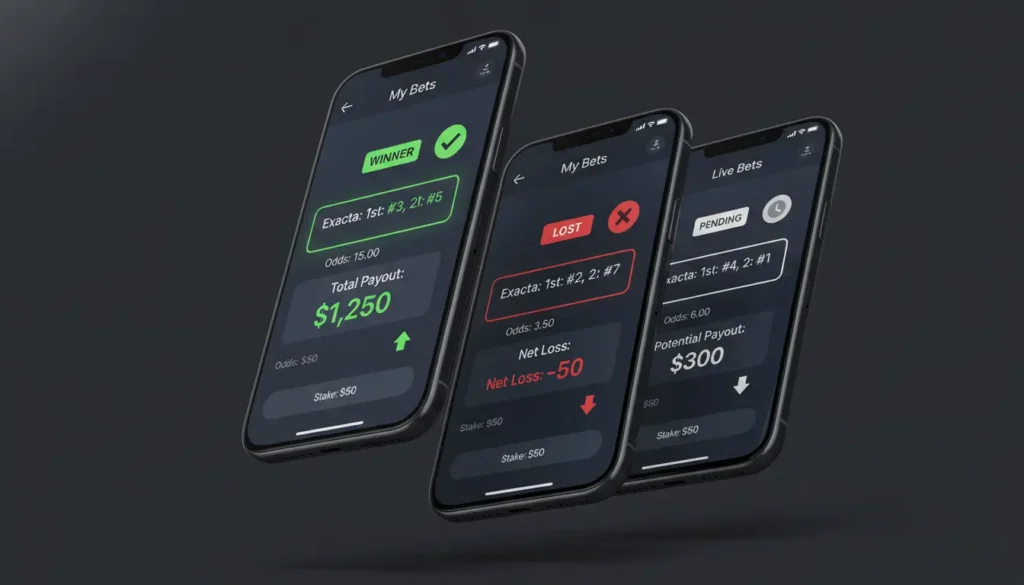
Theory is great, but let’s look at how this all comes together in actual races. These are from my betting log, with all the messy reality included.
Case Study 1: The Belmont Stakes Undercard Special
This was race 8 on Belmont Stakes day this year. Nine-horse field, with a heavy favorite at 4-5 trained by Chad Brown. Classic setup for a favorite-longshot box, right? Wrong.
My vulnerability analysis showed the favorite was bulletproof — perfect figures, ideal post, best jockey. But the second choice at 5-2 was vulnerable — first time on turf, wide post, questionable form. The third choice at 6-1 had run second to the favorite twice.
Instead of boxing the favorite with longshots, I boxed the third choice with three prices (12-1, 15-1, 18-1). My reasoning: if anything beat the favorite, it wouldn’t be the vulnerable second choice. The third choice had already proven it could run with the favorite.
The race played out perfectly. The favorite won by three lengths. The vulnerable second choice faded to fifth. The third choice ran second, and the 15-1 shot that had been training lights out ran third. The 1-6 exacta paid $11 (chalk city), but the 6-9 exacta paid $84. My four-horse box cost $24 and returned $84. Not a huge score, but a 250% ROI on a race where the favorite won easily.
Case Study 2: The Saratoga Chaos Box
Race 3 at Saratoga, mid-August. Six-horse field with morning scratches had turned into a five-horse race. The favorite was 1-2 (yes, 1-2), and everyone else was 8-1 or higher. Conventional wisdom says pass this race.
But I noticed something: the 1-2 shot had never run on a sloppy track. And guess what? It had rained all morning. The track was listed as good, but it was clearly affected. This changed everything.
I boxed the four other horses in exactas, completely fading the favorite. Cost me $24. Why would I make such an insane bet? Because the probable payouts were astronomical. The shortest exacta without the favorite was showing $180.
The favorite broke poorly, got mud in his face, and quit. The race turned into a cavalry charge among the prices. The exacta paid $240. But here’s the kicker — I also had the trifecta with the three longest shots, which paid $2,400 for $1. Sometimes chaos is your friend.
Case Study 3: The Live Betting Masterclass
This happened at Del Mar this summer. I’d identified three horses I liked but couldn’t separate them. Instead of a $12 exacta box before the race, I waited.
The gates opened, and my top choice stumbled badly, losing six lengths. The other two broke perfectly. In the live betting market, the stumbler was now 30-1 to complete any exacta. I immediately boxed him with my other two horses for $10 per combination instead of the planned $2.
By the far turn, the stumbler had recovered and was making a huge run. He flew by the field to finish second behind one of my other horses. The exacta that would have paid $45 on a $2 bet paid $225 on my $10 bet. The live odds had given me 5x the value for the same opinion.
Putting It All Together
The evolution from casual exacta boxer to profitable exacta specialist isn’t about finding some magic system. It’s about understanding the nuances that create value in these pools and having the discipline to wait for those spots.
Every track is different. Every race is different. But the principles remain constant: find asymmetries in the pools, understand track-specific biases, manage your bankroll professionally, and always, always track your results.
I keep a spreadsheet with every exacta box I’ve made for the past five years. Calculate your exact costs using our box bet calculator and tools. It tracks the horses, the odds, the cost, the result, and most importantly, the reason for the bet. That last column is crucial. “Looked good in the paddock” is not a reason. “Favorite vulnerable due to distance question, boxing with proven routers at prices” is a reason.
The patterns in that spreadsheet have taught me more than any handicapping book ever could. I know that my two-horse boxes hit 24% of the time but show a -8% ROI. My three-horse boxes hit 31% of the time with a +12% ROI. My four-horse boxes hit 38% of the time with a +4% ROI. The sweet spot is clear: three-horse boxes with specific angles.
But numbers only tell part of the story. The real education comes from reviewing the losses. Why did that vulnerable favorite win anyway? Why did the track bias not play out as expected? Why did the longshot I boxed run third instead of second? These questions, asked honestly and answered thoroughly, are what transform a boxing enthusiast into a boxing expert.
The Mental Game

Here’s something nobody talks about: the psychological toll of exacta boxing. You’re going to have more near-misses than any other bet type. Your horses will run 1-3, 2-3, 1-4 far more often than they’ll run 1-2. If you can’t handle that, if seeing your horses in the frame but not in the right spots drives you crazy, then exacta boxing isn’t for you.
I’ve learned to reframe these near-misses as information. A 1-3 finish tells me my handicapping was solid but my boxing strategy might need adjustment. Maybe I should have included more horses. Maybe I should have keyed the winner over multiple horses instead of boxing. Each near-miss is a data point, not a bad beat.
The successful exacta boxer needs what I call “selective amnesia.” You need to forget the emotional pain of near-misses while remembering the logical lessons. You need to forget the lucky hits that shouldn’t have happened while remembering the process that led to deserved scores. It’s a delicate balance that takes years to develop.
Exacta box playbook: when it pays and when it burns bankroll
Exacta boxing is simultaneously the most frustrating and most rewarding form of horse betting. When you nail a big box at odds, when your analysis proves correct and the prices align, there’s no better feeling in gambling. But the road to those moments is paved with $24 donations to the pools.
The strategies I’ve outlined here aren’t guarantees. They’re frameworks for thinking about exacta boxes more sophisticatedly than “I like these two horses.” They’re tools for finding value where others see randomness. They’re approaches that have worked for me and might work for you, but only if you put in the work to adapt them to your track, your style, and your bankroll.
Start small. Track everything. Be patient. The exacta pools will always be there tomorrow, next week, next year. There’s no rush to master this overnight. Take your time, develop your eye for value, and remember that in exacta boxing, like in all gambling, the goal isn’t to win every bet. It’s to make good bets consistently and let the math work in your favor over time.
The next time you’re standing at that betting window or hovering over the submit button online, ask yourself: Am I boxing these horses because I can’t decide, or because the box itself offers value? If it’s the former, maybe make a decision. If it’s the latter, fire away. That’s the difference between recreational boxing and professional boxing, and now you know enough to tell them apart.