
Middle Betting Winning Both Sides
 Available in US
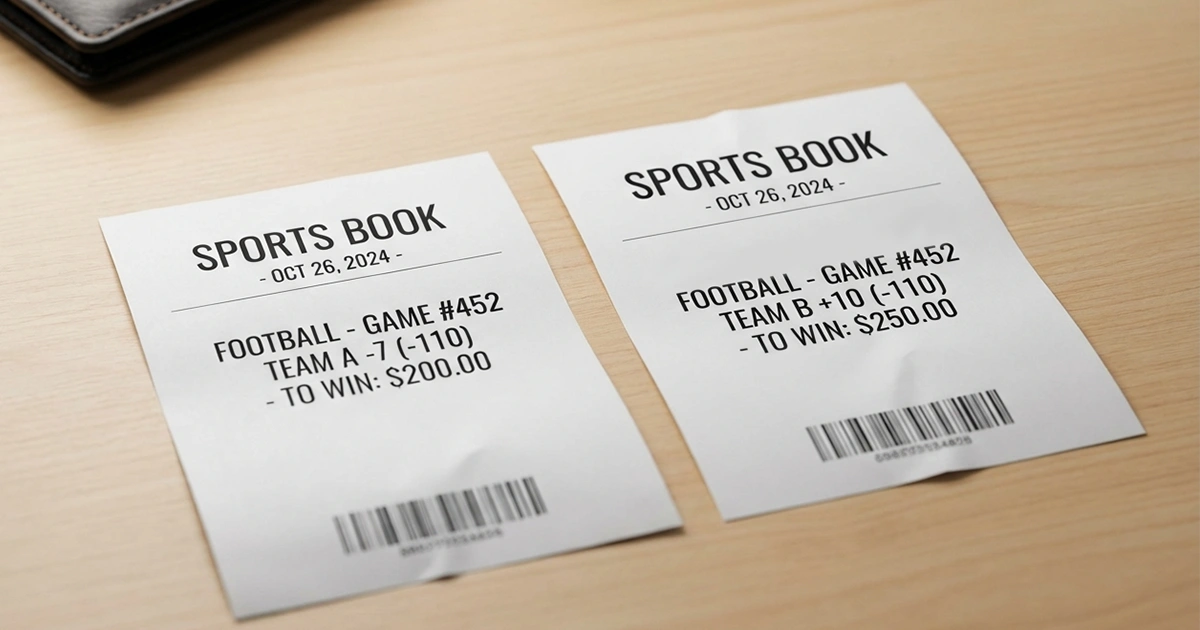
Middle betting represents one of the most appealing propositions in sports betting: the opportunity to win both sides of a wager. Unlike arbitrage, which guarantees small profits regardless of outcome, middling offers the chance for substantial gains when the final result lands in a specific range – while limiting downside to just the vigorish if it does not.
The strategy exploits line movement or discrepancies between sportsbooks. When spreads or totals differ sufficiently, you can bet both sides and create a window where both bets win simultaneously. If the final margin lands in that window, you collect on both wagers. If it lands outside, one bet wins and one loses, costing you only the juice on the losing side.
This asymmetric payoff – limited downside with significant upside – makes middling attractive to experienced bettors willing to monitor lines and act quickly when opportunities arise.
Table of Contents
How Middles Work
A middle requires two bets on opposite sides of the same event at different lines. The gap between those lines creates the middle – the range of outcomes where both bets win.
Consider an NFL game where the Patriots open as 7-point favourites. You bet Patriots -7. During the week, significant action moves the line to Patriots -10. You now bet Jets +10. Your middle is the range 8-9 points.
If the Patriots win by exactly 8 or 9 points, both bets win – the Patriots covered -7 and the Jets covered +10. If the Patriots win by 7 or less, your Jets +10 wins while Patriots -7 loses (or pushes at exactly 7). If the Patriots win by 10 or more, your Patriots -7 wins while Jets +10 loses (or pushes at exactly 10). Outside the middle range, one bet wins and one loses; you lose the juice on the losing bet (typically $10 on a $110 wager).
The mathematics favour this approach when the probability of hitting the middle exceeds the cost of the juice over many attempts. At standard -110 odds on both sides, you lose about $10 in juice when the middle misses. When the middle hits, you win both bets – roughly $200 profit on $220 total wagered. You need the middle to hit approximately once every 21 attempts to break even.
Finding Middle Opportunities

Middles arise from two primary sources:
Line movement at a single sportsbook creates middles when you bet early and the line moves significantly before game time. If you take a spread at one number and it moves several points, betting the other side at the new number creates a middle. This requires either predicting line movement or simply being willing to bet both sides when movement occurs.
Different lines across sportsbooks create middles when books disagree about the correct number. Sportsbook A might have Team X -4.5 while Sportsbook B has Team X -6.5. Betting both sides creates a middle at 5 and 6 points.
The size of the middle directly affects probability of hitting. A 3-point middle (hitting one of three specific margins) is more likely than a 1-point middle (hitting one specific margin). Larger middles are more valuable but also rarer – significant line discrepancies get corrected quickly.
Key numbers in football (3, 7, 10) are particularly valuable for middles because games frequently land on these margins. A middle that includes 3 or 7 has higher probability of hitting than one that spans less common margins.
Calculating Middle Value
Evaluating a middle requires estimating the probability that the final margin lands in the middle range, then comparing expected value of hitting versus missing.
For a basic example at standard -110 odds:
Total risked: $220 ($110 each side)
If middle misses: Win $100 on one bet, lose $110 on other = -$10
If middle hits: Win $100 on both bets = +$200
Break-even probability: $10 / $210 = approximately 4.8%
If you estimate the middle will hit more than 4.8% of the time, the bet has positive expected value. Historical data suggests that specific margins in NFL games occur at known frequencies – the margin of exactly 7 points occurs roughly 9% of the time, for instance. A middle spanning three possible margins might hit 15-20% of the time in favourable circumstances.
The challenge is that you rarely get to choose which margins your middle spans. You take what line movement or sportsbook discrepancy provides. Sometimes you get valuable middles through key numbers; sometimes you get middles through low-probability margins.
Types of Middles
Spread middles are most common. Line movement on point spreads creates gaps where both sides can cover. Football offers the best spread middles due to key numbers and frequent margins of 3-10 points.
Totals middles work identically with over/under lines. If one book has over/under 210.5 and another has 213.5, you can bet Over 210.5 and Under 213.5. If the total lands at 211, 212, or 213, both bets win.
Moneyline middles are less common but possible when one side wins outright. If you take Team A +200 and later Team B becomes available at +180, certain outcomes create pseudo-middle situations, though true moneyline middles are rare since there is no middle outcome in a two-way market.
Player prop middles offer frequent opportunities because lines vary more across sportsbooks. A player’s rushing yards over/under might be 65.5 at one book and 72.5 at another, creating a 7-yard middle.
Middles vs. Arbitrage
Middling and arbitrage are related but distinct strategies with different risk/reward profiles.
Arbitrage guarantees profit regardless of outcome by betting all sides at odds that sum to less than 100% implied probability. Returns are small (typically 1-3%) but certain.
Middling accepts that most of the time one bet wins and one loses, resulting in a small loss (the juice). But when the middle hits, returns are substantial – winning both sides produces roughly 10x the loss when missing.
Arbitrage is appropriate for bettors seeking consistent, low-risk returns. Middling suits bettors comfortable with many small losses punctuated by occasional large wins – similar to the variance profile of prop betting or futures.
Some opportunities combine both: when the middle also creates an arbitrage (odds so favourable that you profit regardless of outcome, with a middle offering bonus upside), you have an ideal situation.
Practical Considerations
Multiple sportsbook accounts are essential for finding middles across books. The more books you monitor, the more opportunities you find. This also requires maintaining funded balances at multiple sites.
Speed matters because line discrepancies get corrected quickly. When you identify a middle opportunity, you must place both bets before odds adjust. Hesitation often means the opportunity disappears.
Stake calculation should equalise potential payouts. If both bets have identical odds, bet equal amounts. If odds differ, adjust stakes so that hitting the middle produces equal profit from either bet winning, and missing the middle produces minimal loss.
Record keeping tracks middle attempts, hit rates, and overall profitability. You need sufficient volume to assess whether your middle identification is producing positive expected value over time.
When Middles Make Sense

Middles suit bettors who monitor lines actively and can identify opportunities as they arise, maintain accounts across multiple sportsbooks with sufficient balances, understand the variance profile (many small losses, occasional large wins), and focus on sports and markets where middles occur frequently.
Football is the primary sport for middling due to key numbers and significant line movement. Basketball offers opportunities particularly in totals and player props. Baseball and hockey have fewer middling opportunities due to lower-scoring, tighter markets.
Middling is not for casual bettors who check lines occasionally, those uncomfortable with extended losing streaks on the juice, bettors with limited sportsbook access, or those seeking guaranteed rather than probabilistic returns.
The strategy rewards patience and discipline. Most middle attempts lose the juice. The occasional hits must compensate for the accumulated losses. Bettors who understand this variance and size their bets appropriately can profit over time; those who overbet or abandon the strategy after inevitable losing streaks will not.
The Bottom Line
Middle betting offers a unique proposition: asymmetric payoffs where your upside substantially exceeds your downside. When executed properly on genuine middle opportunities, the mathematics favour the bettor. The challenge lies in finding legitimate opportunities, acting quickly enough to capture them, and maintaining discipline through the inevitable stretches where middles fail to hit.
For bettors who enjoy tracking lines, monitoring multiple books, and thinking probabilistically about market inefficiencies, middling adds a valuable weapon to the strategic arsenal. For those seeking simpler, more straightforward betting, the complexity and variance may not suit their approach.